
Wisk Aero and NASA Initiate Five-year Research Partnership to Advance Autonomous Flight
Wisk Aero and NASA have entered into a five-year Non-Reimburseable Space Act Agreement (NRSAA) to focus on advancing autonomous aircraft under IFR in the National Airspace System (NAS).
(Mountain View, California) Advanced Air Mobility (AAM) company and Boeing (NYSE: BA) subsidiary Wisk Aero – which has developed the first all-electric, autonomous air taxi in the United States, according to the company – announced today that it has entered into a new five-year Non-Reimburseable Space Act Agreement (NRSAA) with NASA.
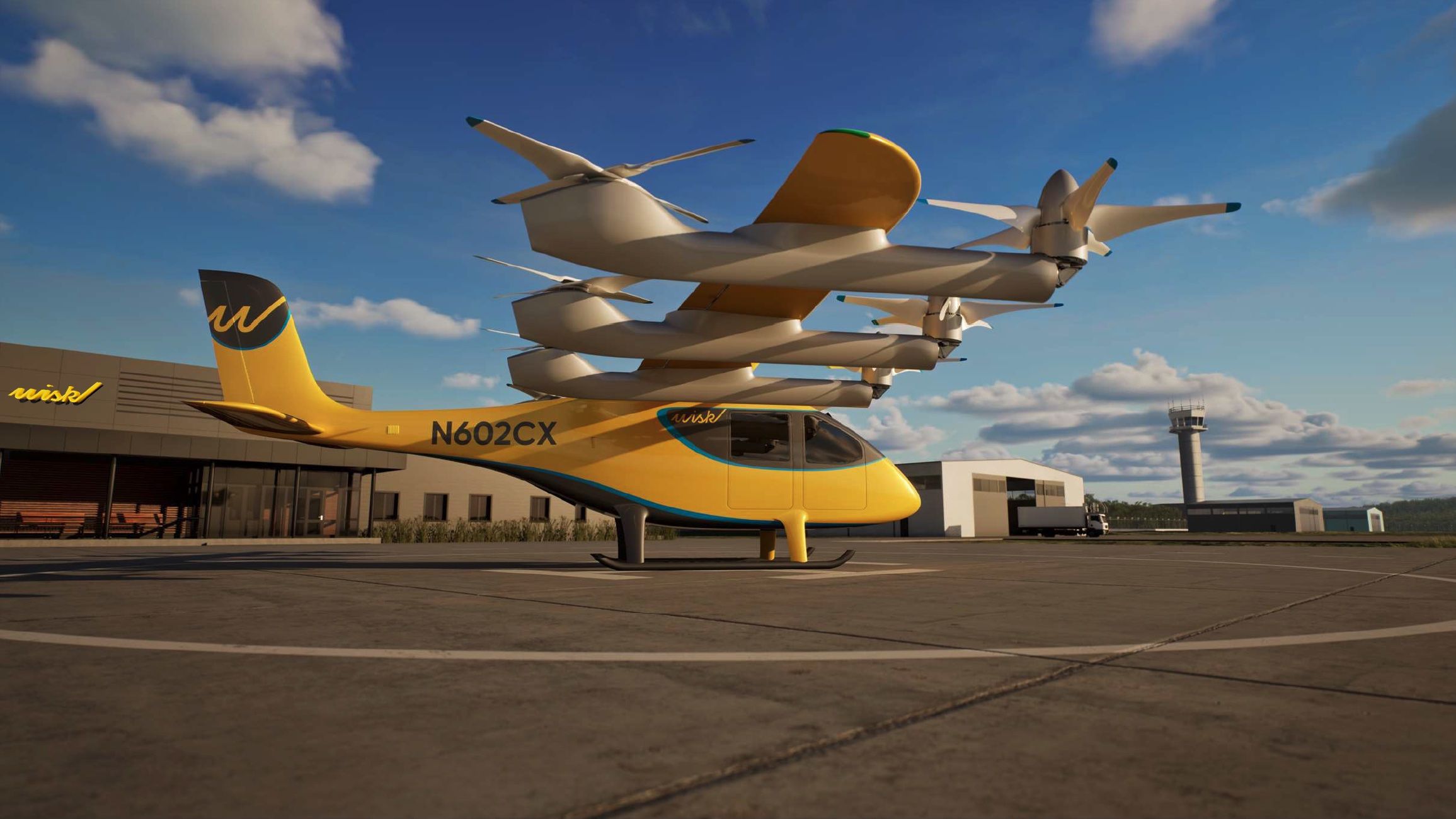
CGI rendering of Wisk’s autonomous, electric vertical takeoff and landing (eVTOL) aircraft courtesy of Wisk Aero.
The Wisk-NASA agreeement focuses on critical research led by NASA’s Air Traffic Management Exploration (ATM-X) project aimed at advancing autonomous aircraft under Instrument Flight Rules (IFR) in the National Airspace System (NAS), according to a press release published by Wisk today.
Today’s news follows the recent (May 7) departure of former Wisk CEO Brian Yutko – who is now leading commercial product development at Boeing – and the appointment of the company’s new chief executive officer, Sebastien Vigneron, who previously held the role SVP of Engineering and Programs at Wisk.
Per Wisk, the company is working with NASA to help define the industry standards that will support the introduction of autonomous aircraft in the NAS; this research will help regulators consider future flight procedures and capabilities to accelerate U.S. leadership in automated aviation technology.
Electric vertical takeoff and landing (eVTOL) aircraft developer Wisk and NASA have collaborated to develop guidance for the safe integration of autonomous aircraft systems for urban air mobility (UAM) operations under an initial Space Act Agreement; their expanded collaboration will focus on research using advanced simulation and Live Virtual Constructive (LVC) flight environments that combine live flights with a simulated airspace to enable researchers to assess future operations, according to Wisk.
Per Wisk, its forthcoming work with NASA will be instrumental in informing the development of the following:
- Airspace and route design optimized for highly automated Urban Air Mobility (UAM) operations
- Critical aircraft and ground-based safety system requirements necessary for autonomous flight in urban environments
- Air Traffic Control (ATC) communications protocols and procedures for seamless integration of UAM aircraft
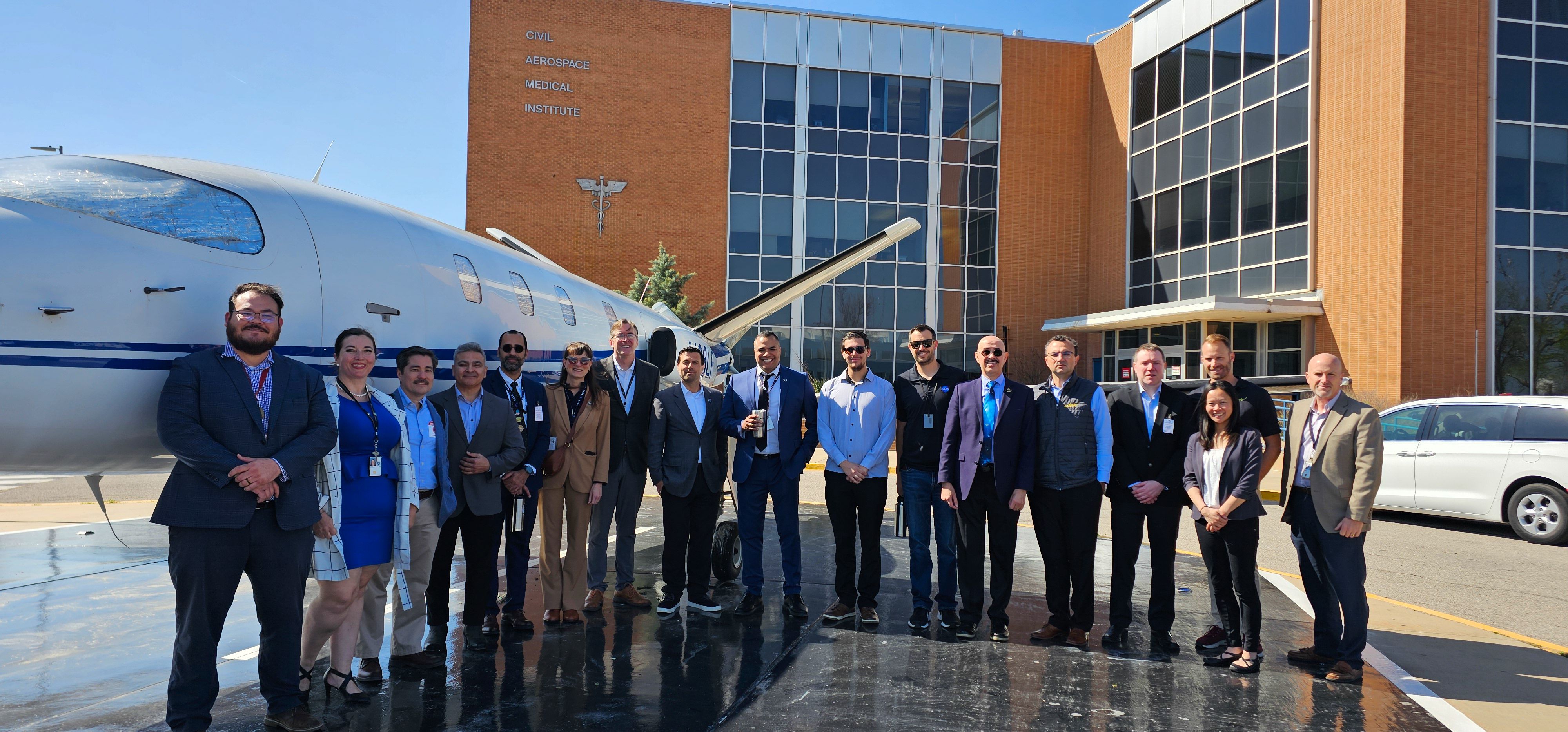
Photo of the Wisk Aero team on a tour of the FAA Civil Aerospace Medical Institute (CAMI) research facilities at the Mike Monroney Aeronautical Center – where they held a workshop last month (April 2025) with NASA – courtesy of Wisk Aero.
“This new, long-term agreement with NASA is a significant step forward for Wisk and the broader UAM industry,” said Erick Corona, Director of Airspace Operational Integration at Wisk. “With NASA’s simulation and LVC capabilities, we can accelerate the development of our Gen 6 autonomous systems to safely and efficiently integrate into the U.S. NAS before the end of the decade.”
To initiate early work under this annex, the Wisk and NASA teams held a workshop last month at the Mike Monroney Aeronautical Center in Oklahoma City, where the teams discussed how instrument flight procedures and advanced technologies would work hand-in-hand to enable safe and efficient autonomous passenger flight, according to Wisk.


