
Whisper Aero co-Founder & CEO Mark Moore Discusses His Revolutionary (& Extremely Quiet) NextGen Air Propulsion Company
Whisper Aero recently announced the grant of major contracts from the U.S. Air Force to fund a fleet of forthcoming, unmanned collaborative logistics aircraft (CLA) for cargo missions utilizing the company’s proprietary propulsion systems.
(Crossville, Tennessee) Next-generation propulsion provider Whisper Aero Inc. unveiled its new family of systems for contested logistics – known as Collaborative Logistics Aircraft (CLA) – during Special Operations Forces Week in Tampa, Florida last week (May 5 – 8th); with plans for flight testing in 2027 and commercial applications of the CLA anticipated by 2030-2032, Whisper’s forthcoming fleet of defense-purposed cargo aerial vehicles is set to become a game-changer for both the domestic defense and civil air cargo industries.
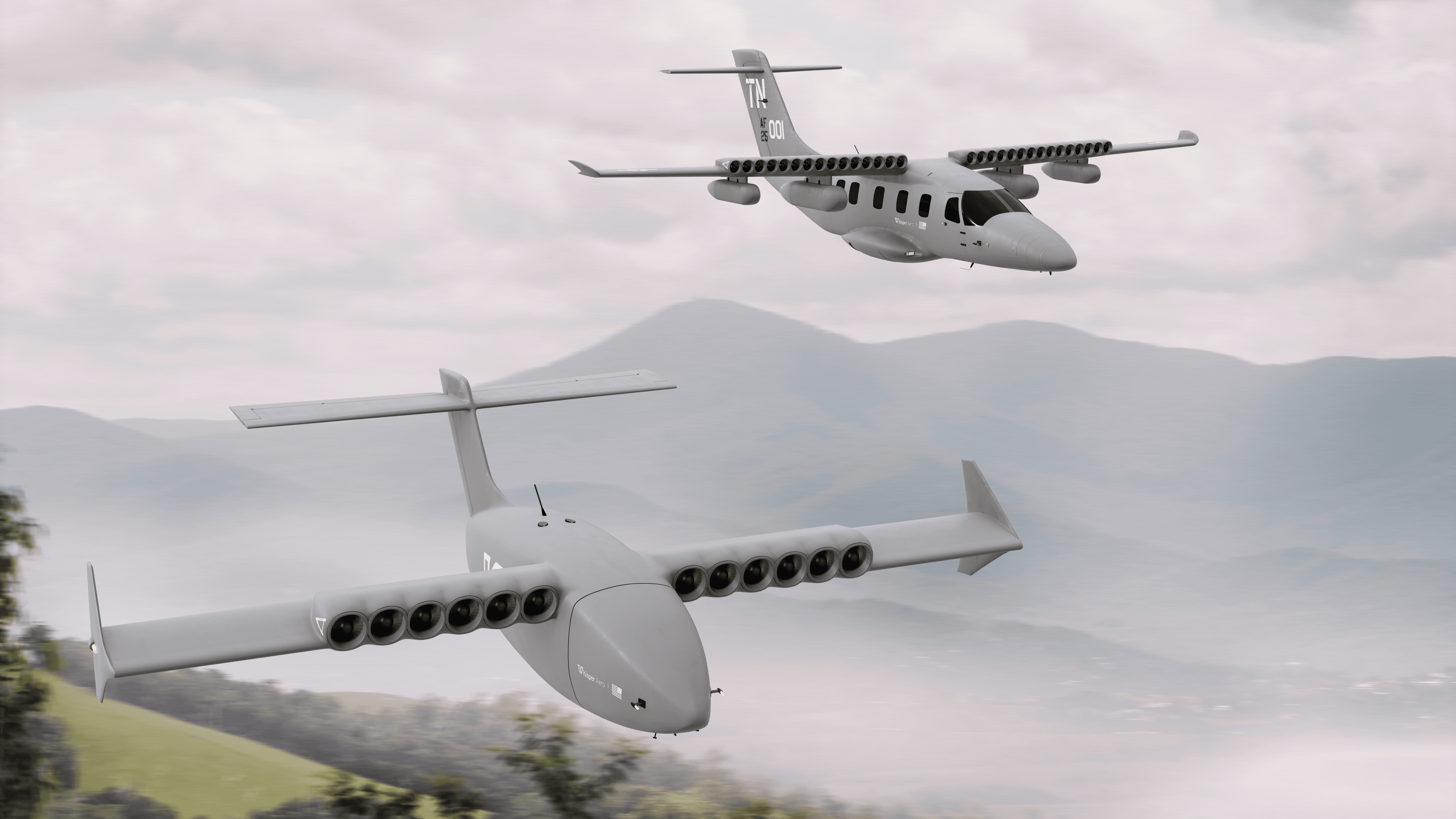
Rendering of a flyover of Whisper Aero’s Collaborative Logistics Aircraft fleet courtesy of Whisper Aero.
Whisper’s CLA development plans include light (500 lb payload), medium (1,500 lb payloads) and heavy (3,000 lb payload) variants, and development is being accelerated by the U.S. Air Force via its Strategic Finance Increase (STRATFI) and Operational Energy Capabilities Improvement Fund (OECIF) contracts. The CLA will utilize Whisper’s proprietary UltraQuiet™ propulsion and JetFoil™ integrations for conventional and short takeoff and landing (STOL), and will be developed along with a number of partners (including airframe, battery and other key technology partners).
Whisper’s propulsion systems are the core enablers for the CLA platform – specifically, multiple eQ250 propulsors, capable of 80 lb of thrust each, will be integrated into the leading edge of the wings of the CLA aircraft in a concept known as JetFoil, to achieve coefficients of lift as high as 14, which are critical for short takeoff and landing from degraded runways. eQ250 propulsive efficiency improves at higher speeds, enabling higher speed flight of up to 250 knots with reduced acoustic and thermal signatures compared to existing turboprop- or turbojet-propelled aircraft. Static performance of Whisper’s propulsory systems has been verified through tests with the Air Force Test Center (AFTC) at White Sands Missile Range’s (WSMR) Acoustic Range Complex (ARC), according to last week’s press release from Whisper.
All three of Whisper’s CLA variants are designed to achieve a maximum amount of operational flexibility in order to serve the logistics needs of various parties, according to Whisper Aero Chief Executive Officer Mark Moore.
“The CLA really opens up the distributed operations portfolio in a way that materially extends the reach and rightsizing capability of cargo operations,” explained Moore – who, prior to co-founding Whisper with Chief Operating & Product Officer Ian Villa in 2021, held the roles of Engineering Director of Aviation at Uber Elevate (four years) and Chief Technologist for On-Demand Mobility (2 years) and Principal Investigator (32 years) at NASA.
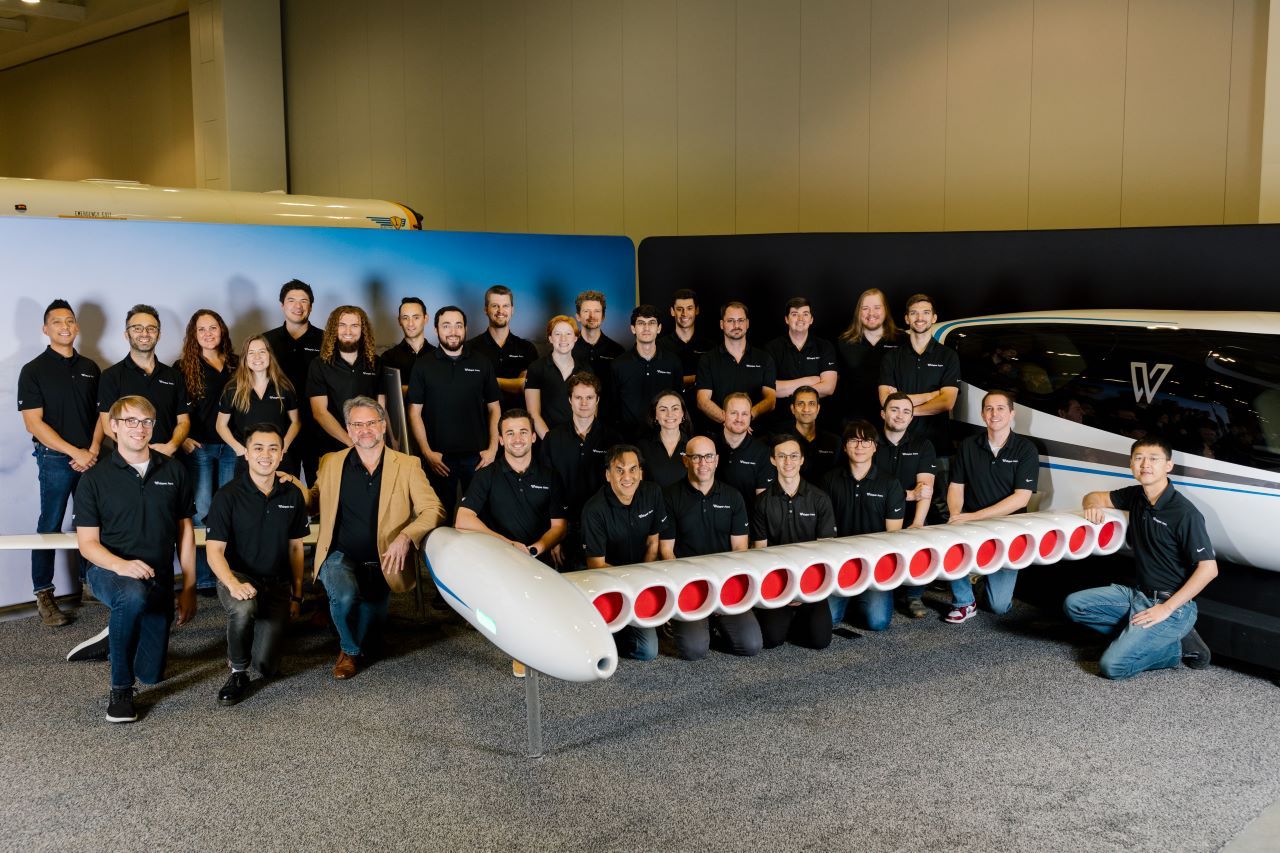
Photo of the Whisper Aero team, including co-founders Chief Executive Officer Mark Moore and Chief Operating & Product Officer Ian Villa, courtesy of Whisper Aero.

Photo of the Whisper Aero co-founders Chief Executive Officer Mark Moore and Chief Operating & Product Officer Ian Villa, courtesy of Aviation Week Network.
“Whisper is really excited because these new platforms [- the STRATFI and OECIF funding-] will allow us to highlight our technology advantages – ultra-quiet and high-speed propulsion and the integration of our propulsory techniques into aircraft – which create very unique and compelling platforms that don’t exist today,” Moore said.
For background – and for those who are not yet familiar with Whisper (you will be, soon) – Whisper Aero is venture-backed and has raised about $53 million from venture funders since its inception in 2021. In the spring of 2023, the Tennessee-based company announced that it had received $32 million in funding via its Series A round, which included a syndicate comprised of Menlo Ventures, EVE Atlas, Capricorn’s Technology Impact Fund, and Connor Capital, in addition to funding from Kindred Ventures, Abstract Ventures, Moving Capital, AeroX Ventures, Cosmos Ventures, Linse Capital, and LaunchTN, a public-private partnership with the state of Tennessee.
At the time of Whisper’s Series A announcement in 2023, Moore stressed in an interview with TechCrunch that electric vertical takeoff and landing (eVTOL) vehicles would need to be able to operate extremely quietly in order to become widely adopted and accepted by global communities.
“If you want to get to scale with delivery drones or eVTOL air taxis, you better be really quiet,” Moore told TechCrunch in the 2023 interview. “You’ve got to be quiet enough that you’re not disruptive to communities.”
At the present time, Whisper Aero currently maintains three different product verticals, including that which encompasses utilizing its technology in a forthcoming CLA fleet with the U.S. Department of Defense (DOD):
- (1) Commercial and industrial applications of its propulsion technology, including ultra-quiet electric leaf blowers which will be brought to market next year (in 2026) and are being executed for early revenue streams and viable product entries;
- (2) Working with the U.S. DOD to include Whisper’s propulsion technology intro drones and forthcoming CLAs — an avenue that can, in the midterm, get products to market faster than they would be delivered in the civil aeronautics world and
- (3) The CLA business unit, which will deliver certified dual-use aircraft which may be utilized for both defense and civil applications for carrying both passengers and cargo. The time horizons for the certification of those aircraft make this third business unit a longer business proposition than the other two; the expectation is that Whisper’s first civil aeronautic products will be delivered between 2030 and 2032.
The impetus behind the recent introduction of Whisper’s CLA family is the company’s belief that in the future, cargo missions will increasingly rely on distributed fleets of right-sized logistics unmanned aircraft systems (UAS) capable of operation from austere runways at any time of day.

Rendering Whisper Aero’s forthcoming Collaborative Logistics Aircraft fleet courtesy of Whisper Aero.
“Advanced air mobility is about democratizing aviation – instead of aviation being centralized, it should be distributed in order to better serve the needs of the public,” Moore explained. “That’s true in the Defense world, as well. Instead of having centralized cargo operations, advanced air mobility (AAM) is about being able to embrace distributed cargo and logistics operations in order to better specific use cases.”
As explained in the May 6th press release from Whisper, the Defense industry’s current air mobility portfolio relies heavily on large, fuel-hungry, runway-dependent aircraft that strain operational resilience — the widespread inability of existing aircraft to utilize shorter, less-maintained runways left over from World War II and other relics make future contested logistics especially challenging, and decentralized and more autonomous operations are desirable in order for relevant parties to be able to deliver critical payloads in a timely fashion.
For context, as of September 2024, there were 19,633 airports in the United States, according to the Federal Aviation Administration (FAA) – 5,082 of which are public, 14,551 of which are private and less than 500 of which are commercial (run by 520 airport traffic control towers). The ability to utilize what are currently largely ‘unused’ private airports marks a significant opportunity for logistics and efficiency improvements.
As Whisper explains in its press release, novel aircraft capabilities are required to ensure payload delivery in new Agile Combat Employment concepts; to meet the needs of the future, in particular, logistics aircraft need to be capable of short take-off and landing (STOL) or vertical take-off and landing (VTOL) operations, and be “autonomous, more efficient, more survive-able, more maintainable and more affordable.”
Particularly in contested and otherwise dangerous territories, the removal of the requirement of on-board pilots will be key to the operational success of cargo defense future missions.
“Especially in situations involving contested logistics, it’s very important that we don’t put pilots in harms way where it can be avoided,” Moore said. “Having the CLA fleet be autonomous, where the DOD can risk an aircraft asset without risking individuals, is an important capability.”
Whisper believes that an autonomous approach to the Air Force’s current logistics challenges will unlock new concept of operations (CONOPS) capabilities to move payloads anywhere, at any time – the removal of the need for pilots onboard render aircraft more affordable and efficient.
“Take the [Lockheed Martin (NYSE: LMT) C-130 Hercules] as an excellent example of how the Department of Defense moves cargo today — the C130 being the workhorse of the DOD cargo fleet that covers a large proportion of logistics needs,” Moore explained. “The latest C130 Super Hercules costs about $87 million and can move about 44,000 pounds of cargo. There are many times when there is a critical part or payload that needs to be delivered, and instead of the Super carrying 5,000 pounds of cargo, it carries 500 lbs — that’s a very inefficient platform.”
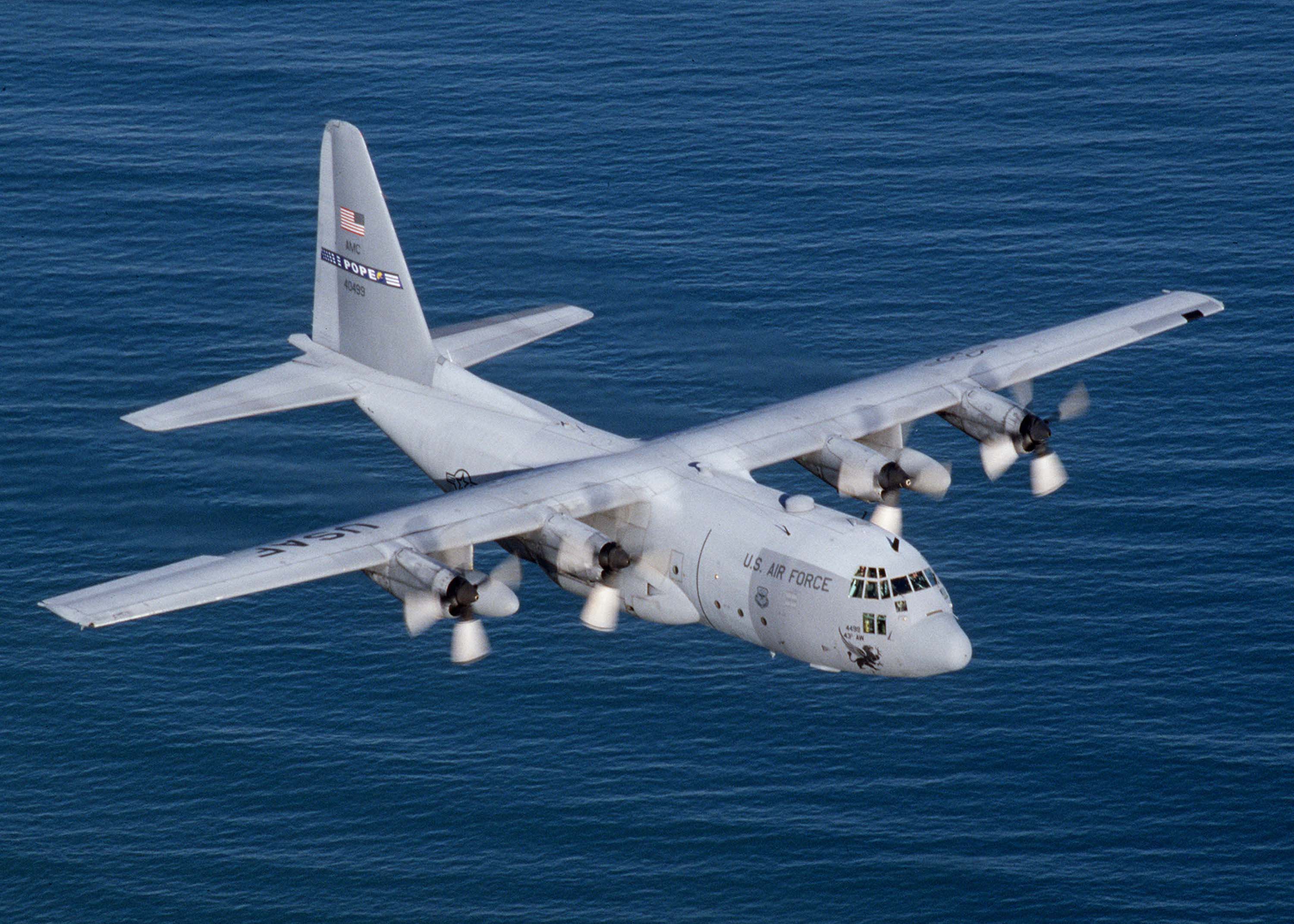
Photo of Lockheed Martin’s C-130 Hercules, a cargo aircraft used heavily by the U.S. Department of Defense, courtesy of Wikipedia.
In addition to utilizing air cargo aircraft such as the C-130 (and other planes) for contested logistics, the Department of Defense has retrofitted various aircraft for specific cargo needs, Moore explained – including, for example, the de Havilland Canada DHC-6 Twin Otter — however, these retrofitted aircraft are not specifically designed for DOD needs.
“Cessna Grand Caravans and Pilatus PC-12s can also accommodate the payloads that the forthcoming CLA will carry, but they weren’t purpose-designed for DOD needs,” Moore explained. “They’re essentially ‘plugging holes,’ rather than the DOD using a comprehensive fleet that utilizes common parts and avionics [which the CLA will provide], and none of these retrofitted aircraft provide autonomous operations.”
Whisper Aero’s CLA family seeks to eliminate cargo inefficiencies by providing “something for everyone” in terms of payload sizes.
“Now, [with the introduction of Whisper’s CLA family,] the military will be able to fly a small 1,300 CLA Light that can carry 500 pounds directly to where it’s needed, with very minimal infrastructure footprint required — because the CLA will be able to take off and land with a 50-foot ground roll rather than a 5,000-foot ground roll,” Moore explained. “The CLA really opens up distributed operations to a fleet that will significantly expand the reach and rightsizing capability of cargo operations.”
“Another neat thing about the CLA is that it involves a family of aircraft that largely utilizes the same parts and pieces,” Moore added. “All of the aircraft propulsory systems are the same across this fleet of aircraft — it’s very easy to support not just one aircraft, but the entire family.”

Rendering of two variants of Whisper Aero’s Collaborative Logistics Aircraft fleet in a hangar courtesy of Whisper Aero.
The amount of the Air Force’s STRATFI and OECIF funding for Whisper remains undisclosed at this time, and although Whisper’s airframe and other partners are currently also still undisclosed, Whisper Chief Executive Officer Mark Moore said that he “can’t wait to announce who our autonomy partner is, because they are doing amazing things in the industry.”
“[The STRATFI and OECIF] platforms will allow us to take the technology we’ve developed over the past four years, prove them on the ground and take them to a technology readiness level of seven (TRL 7), which applies to flight demonstration prototypes that can directly be turned into products,” Moore explained. “This is what the STRATFI program is all about — leveraging public and private funding to develop new, high quality products as soon as possible.”
Moore explained that it’s unusual for a propulsion company – rather than an air framer – to be the prime contractor (as Whisper has been designated), working with subcontractors to support and participate in the development of its products, on an Air Force contract.
“It’s unusual in the way the contract is being issued, but propulsion tends to lead to transformation,” Moore explained. “If you look back at the last 100 years of aviation, it’s when there are significant changes in propulsion technology that aircraft have really improved their capabilities and performance. For example, when we went from piston to turbine engines, dramatic improvements in speed, range and altitude capabilities were achieved. Propulsion is really the tip of the sphere in terms of being able to achieve technological transformation, which is one of the reasons why Whisper is the prime on this contract.”
Per Whisper’s May 6th press release, over the next four years, Whisper Aero will be focusing its air mobility efforts on rapidly designing, building and flying multiple full-scale CLA variants with the intention of bringing this capability to service on a program of record.
As additional manufacturing and autonomy partners will be announced in the near future, customer interest for vertical takeoff and landing (VTOL) variants of Whisper’s CLA family has also been indicated, and VTOL variants may be explored in the future alongside additional partners, according to the company.
“This is not just about Whisper aero — the STRATFI and OECIF awards are about several amazing partners coming together across the different key technology areas required for the success of this new contested logistics capability,” Moore said.
As for Whisper’s products, Moore said, “it’s been such an adventure for me working as a NASA researcher for so long, and then focused on products at Uber Elevate, to be able to marry my entire career and put it into this core idea — and then having our core engineers take this amazing idea and make it a reality. It’s amazing to see something that was just an idea be turned into reality — you always imagine something’s going to be great, but when hardware actually turns into greatness, it really puts a smile on your face. That’s what the amazing engineers at Whisper Air have done.”


