
United Invests in Sustainable, BWB Aircraft Startup JetZero & Places Conditional Order for up to 200 Airplanes
JetZero's Z4 blended wing body, or "all wing" design, has the potential to enhance passenger experience and improve fuel efficiency by up to 50%, according to United.
(Chicago, Illinois) United (NASDAQ: UAL) announced today an investment in blended wing body (BWB), sustainability-focused aircraft start-up JetZero, which is building a jet that will initially provide up to 50% less fuel burn and lower emissions compared to current tube-and-wing models.
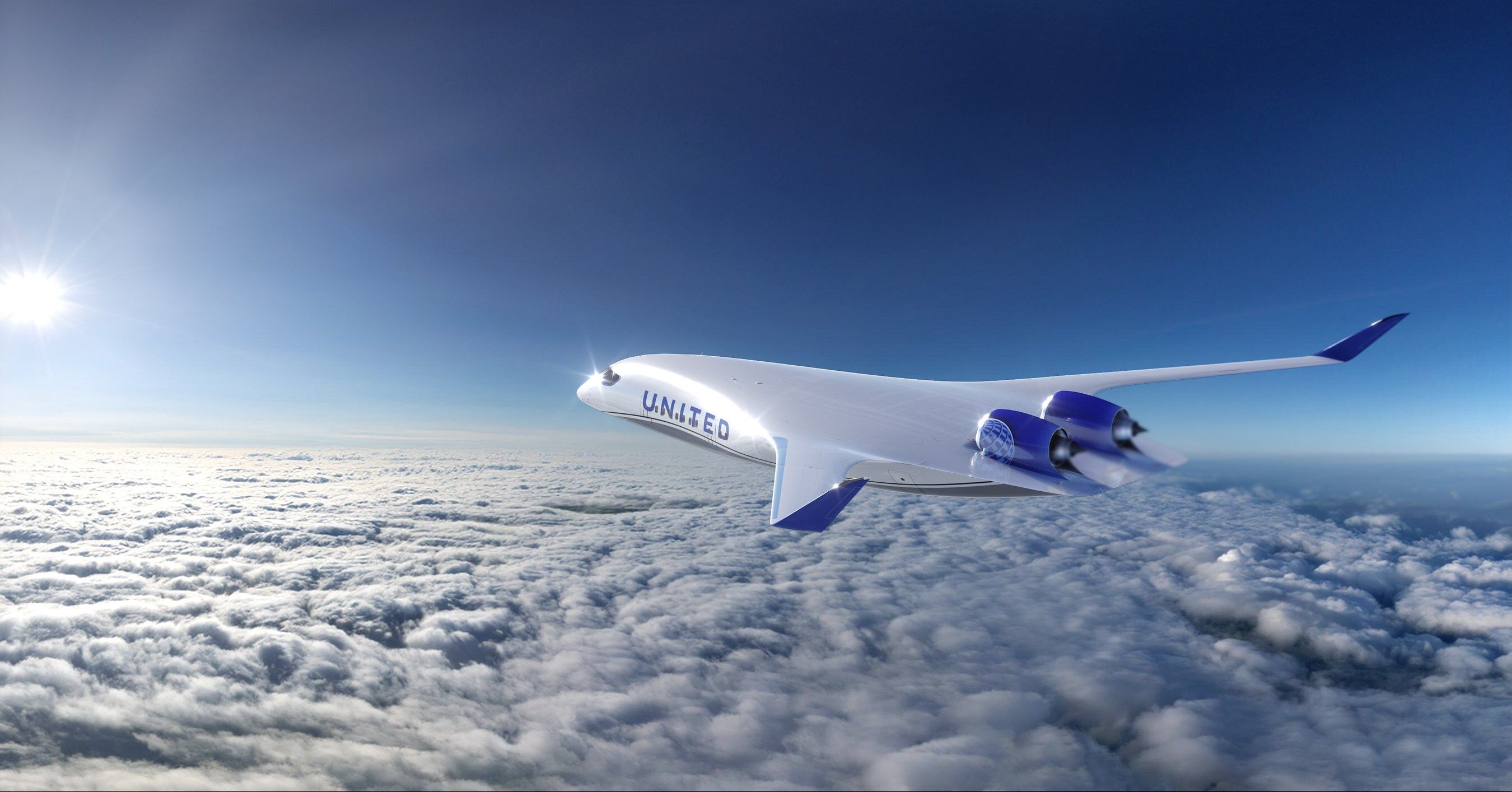
Rendering of a United JetZero blended wing body (BWB) airliner courtesy of United.
United’s investment includes a path to order up to 100 airplanes and an option for an additional 100 – the conditional purchase agreement is contingent on JetZero achieving development milestones, including a flight of a full-scale demonstrator in 2027 and other conditions, including that the aircraft meet United’s safety, business and operating requirements.
The JetZero Z4 airplane – which the company pegs as the world’s first commercial all-wing design airplane – is designed to accommodate 250 passengers and fly on conventional jet fuel, with propulsion systems able to utilize sustainable aviation fuel blends, according to today’s press release from United.
JetZero is targeting an entry for its Z4 airplane into commercial service in 2030, and is currently working alongside the US Air Force, NASA and the FAA; not including this latest funding from United, JeZero has raised $300 million to date.
An article today in The Air Current notes that United’s investment in JetZero is both its first in a company whose market niche targets a spot in United’s current fleet, and which offers a potential direct challenge to the Airbus and Boeing duopoly.
"If successful, JetZero has the potential to evolve our core mainline business by developing aircraft with a bigger, more comfortable cabin experience for our customers while increasing fuel efficiency across our network," said Andrew Chang, head of United Airlines Ventures (UAV). "United Airlines Ventures® was created to support our efforts to find innovative companies that can enhance the customer travel experience and help the airline lower its carbon footprint, and we believe JetZero reflects that philosophy."
Per United, its corporate venture capital fund, United Airlines Ventures, enables the airline to invest in emerging companies that have the potential to influence the future of travel. UAV has made a number of alternative aircraft investments, including: hybrid-electric, hydrogen-powered and electric vertical takeoff and landing (eVTOL) vehicles.
JetZero co-Founder and CEO Tom O’Leary said: “United’s investment in our company signals the industry’s belief that new, innovative technology is needed in order to achieve the efficiency and cost savings that will be required to meet the continued growth in demand for air travel across the globe. JetZero is focused on one key technology – the airframe – that enables us to address all of the barriers to growth. This program is the only one in development today that promises efficiency and an elevated customer experience."
In August of 2024, [Alaska Airlines] (NYSE: ALK) announced a second investment in JetZero, following its previously undisclosed initial investment in the company in 2023 as part of JetZero’s Series A capital raise, when it became the first airline to back the startup.
In 2023, the U.S. Air Force also announced a $235 million contract to JetZero to fast-track the development of JetZero’s full scale demonstrator.
Per today’s press release from United, both the airplane’s shape, and the way JetZero plans to enter the plane into service, address industry pain points:
- (1) The design contributes to a more efficient operation due to its shape and the higher altitude at which it will fly. For instance, a flight from New York/Newark to Palma de Mallorca, Spain would use up to 45 percent less fuel compared to the twin-aisle aircraft that operate that route today.
- (2) The airplane also is expected to integrate readily into today’s airport infrastructure, requiring no new accommodations for jet bridges, runways or taxiways.
- (3) JetZero’s aircraft design has the potential to also offer improvements to the passenger experience like flexible seating options, larger seats across all classes and dedicated overhead bin space for each seat.
- (4) Additionally, the aircraft design streamlines the boarding process with a main boarding door that is wider than that of a comparably sized aircraft, leading to multiple aisles and passenger cabin bays for more efficient passenger distribution. It may further enhance accessibility by featuring wider aisles and handicap-accessible lavatories, creating a comfortable travel environment for all passengers and in-flight crew.


