
SpaceX Launches Polaris Dawn Mission; Astronauts Will Attempt First-Ever Private Spacewalk
The Polaris Dawn crew - led by Mission Commander and billionaire Jared Isaacman - will endeavor to reach the highest Earth orbit ever flown since the Apollo program.
(Merritt Island, Florida) This morning (Sept. 10) at 5.23 a.m., SpaceX’s four-person Polaris Dawn mission – which aims to create history by conducting the first-ever private spacewalk and the furthest crewed space flight since NASA’s Apollo moon missions more than 50 years ago – lifted off atop a SpaceX Falcon 9 rocket from Launch Complex-39A at NASA’s Kennedy Space Center.
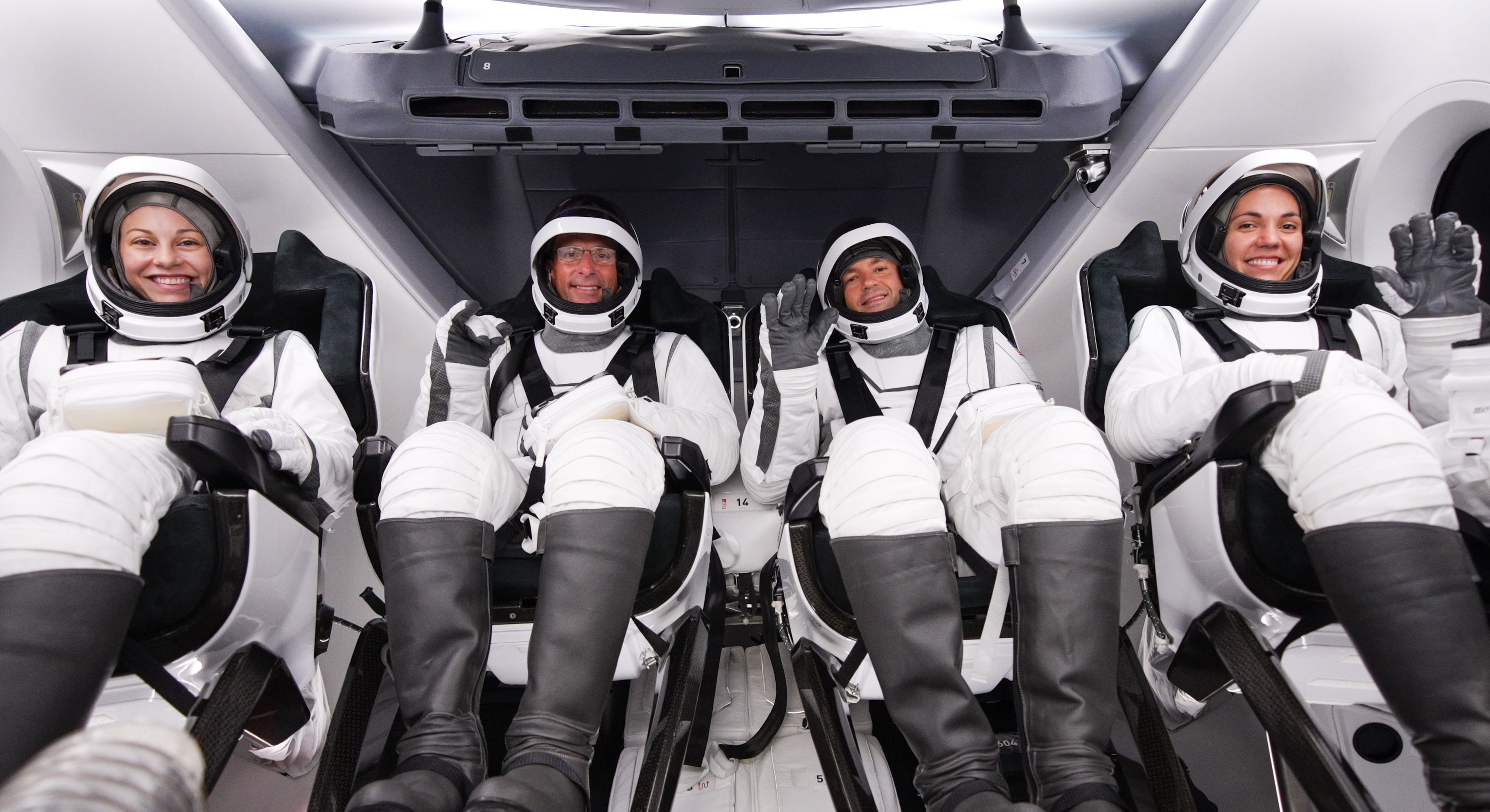
Photo of the Polaris Dawn crew – including Mission Commander and U.S. entrepreneur and billionaire Jared Isaacman, 41, retired U.S. Air Force pilot Scott Poteet, and senior SpaceX engineers Anna Menon and Sarah Gillis courtesy of SpaceX on X, @spacex.
Onboard SpaceX’s Dragon spacecraft are Mission Commander and U.S. entrepreneur and billionaire Jared Isaacman, 41, Scott Poteet, a retired U.S. Air Force pilot, and senior SpaceX engineers Anna Menon and Sarah Gillis.
About two minutes and 40 seconds into the launch, the Falcon 9’s main engines cut off, and the booster separated from the second stage as planned; the booster then performed a series of burns to align its return trajectory with the SpaceX autonomous droneship Just Read the Instructions, which was stationed in the Atlantic Ocean, according to Space.com.
Approximately 9.5 minutes after liftoff, the rocket touched down on the barge off Florida’s eastern coast, and Polaris Dawn’s Crew Dragon spacecraft separated from Falcon 9’s upper stage just over 12 minutes after launch, per Space.com.
During the five-day orbital mission, the Polaris Dawn’s crew, led by Isaacman, will undertake 36 scientific experiments from 31 partner institutions. These research projects will focus on enhancing understanding of how humans adapt, live, and work in space, per SpaceX.
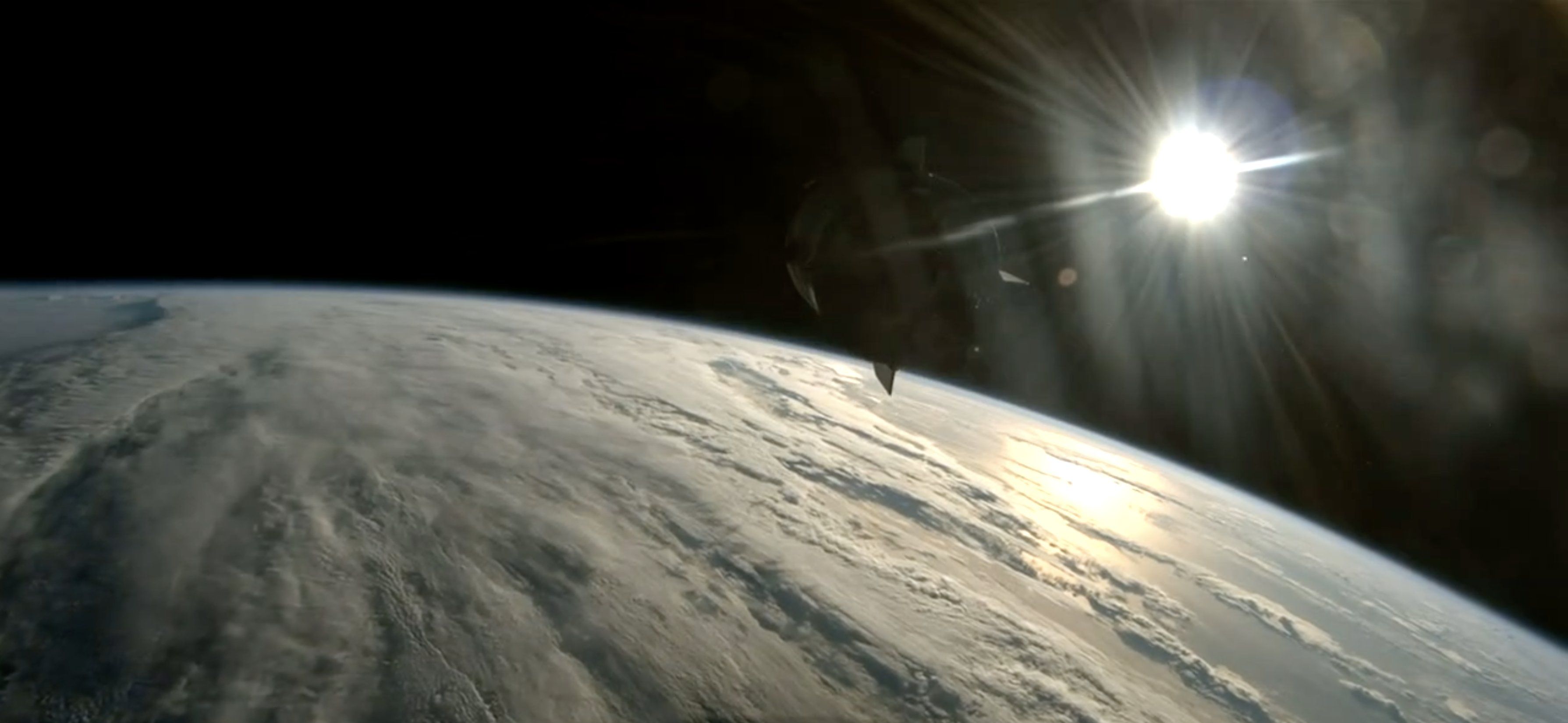
Photo of SpaceX’s Dragon separated in space post-Falcon 9’s second stage courtesy of SpaceX on X, @spacex.
At the farthest point of its orbit, the Polaris Dawn mission will reach an altitude of 870 miles, beating out NASA’s 1966 Gemini XI mission’s orbit record of 853 miles—the highest ever by a non-lunar mission, per Forbes.
The Polaris Dawn spacewalk – which will test out SpaceX’s newest extra-vehicular (EVA) spacesuits – is set to take place on the third day of the mission; Isaacman and Gillis will each spend around 15 minutes outside the spacecraft, according to Forbes.
Designed to withstand the vacuum of space, SpaceX’s EVA suit is an evolution of the Intravehicular Activity (IVA) suit used during previous missions, but with significant enhancements that offer greater mobility and protection for astronauts, per SpaceX.
Specifically, the suit’s 3D-printed helmet incorporates a new visor to reduce glare during the EVA in addition to the new Heads-Up Display (HUD) and camera that provide information on the suit’s pressure, temperature, and relative humidity. The suit also incorporates enhancements for reliability, redundancy and safety during a spacewalk, adding seals and pressure valves to help ensure the suit remains pressurized, according to SpaceX.
“While Polaris Dawn will be the first time the SpaceX EVA suit is used in low-Earth orbit, the suit’s ultimate destiny lies much farther from our home planet. Building a base on the Moon and a city on Mars will require the development of a scalable design for the millions of spacesuits required to help make life multiplanetary,” reads a blog post from SpaceX.
Polaris Dawn’s launch date today was delayed by nearly two hours due to poor weather conditions at the launch site, an issue that also prevented the mission’s first launch attempt on August 28th. Since the mission does not involved docking with a space station, clear weather at Dragon’s launch and reentry sites were crucial.
Per IFL Science, the Federal Aviation Administration’s (FAA) grounding of a SpaceX Falcon 9 rocket following an explosion during landing also contributed to delays.
The Dragon spacecraft used in today’s mission has a history of achievements, having previously supported the Crew-1 mission to the ISS and the all-civilian Inspiration4 mission.


