
SpaceX, FCC Commissioner Carr and Maye Musk (Elon Musk’s Mom) Blast FCC for Reaffirming Denial of $866 Million Grant to Starlink
The Federal Communications Commission (FCC) reaffirmed its 2022 position to deny an $866 million broadband grant; SpaceX argued erroneous decision-making.
(Washington, D.C.) On December 12th, the Federal Communications Commission (FCC) announced that it rejected SpaceX’s appeal of its refusal of an $866 million broadband grant for Starlink through the Rural Digital Opportunity Fund (RDOF) program; SpaceX, FCC Commissioner Brendan Carr and Elon Musk’s mother, Maye Musk, immediately expressed disappointment, with SpaceX alleging erroneous decision-making by the FCC in its response.
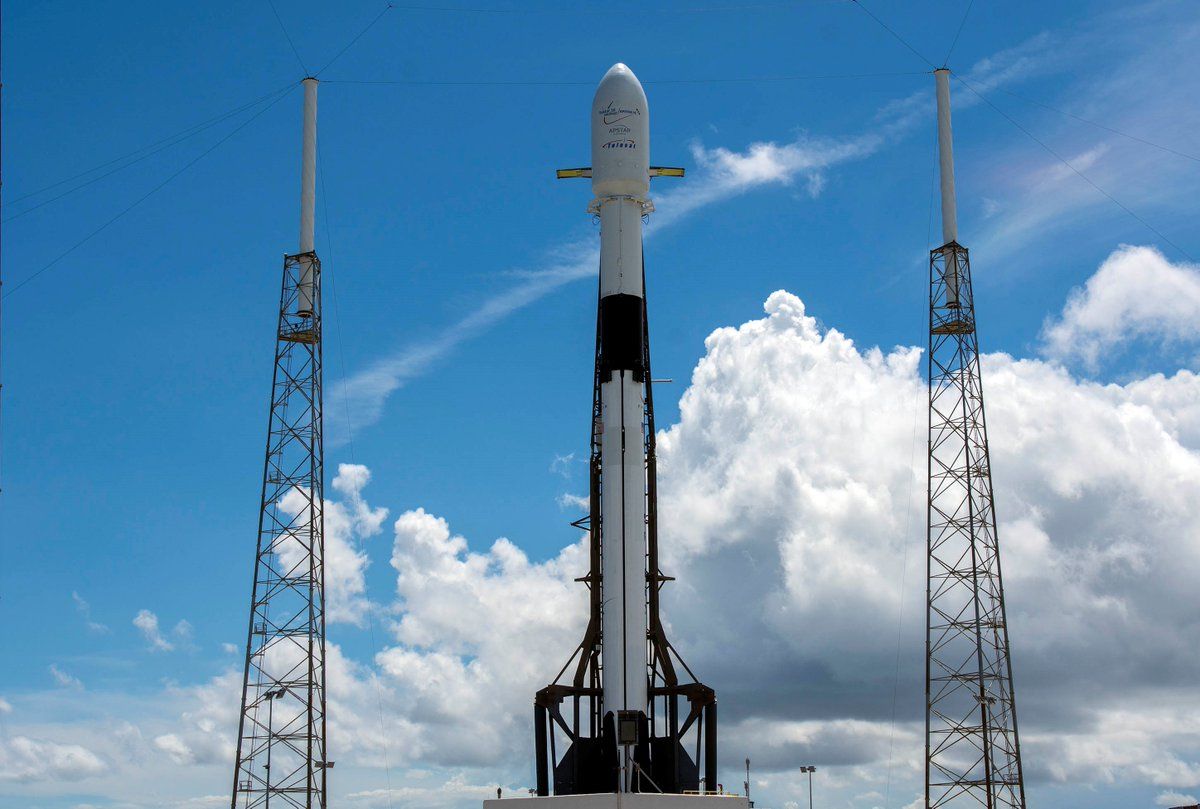
Photo courtesy of SpaceX via SpaceFlight Now: A Falcon 9 rocket at Cape Canaveral’s Complex 40 launch pad in September 2018.
According to a press release from the FCC, the agency’s refusal was based on SpaceX’s failure to meet the RDOF’s program requirements. The release explained that while the first, short-form step of the approval process qualified Starlink (by the FCC under the previous administration and then-Chairman Ajit Pal), the FCC in its second and final, longer-stage step for grant approval found that Starlink failed to demonstrate that it could deliver the promised broadband service. The commission concluded that funding the vast proposed networks would not be the best use of “limited Universal Service Fund dollars to bring broadband to unserved areas across the United States.”
“The FCC followed a careful legal, technical and policy review to determine that this applicant had failed to meet its burden to be entitled to nearly $900 million in universal service funds for almost a decade," said FCC Chairwoman Jessica Rosenworcel.
FCC Commissioner Brendan Carr dissented with the agency’s decision, explaining his opinion that the Biden administration is targeting Elon Musk on CNBC.
Carr tweeted on X – formerly known as Twitter – his opinion again this afternoon (December 14th): “First, the FCC revokes Starlink’s $885 million award by making up an entirely new standard of review that no entity could ever pass and then applying that novel standard to only one entity: Starlink. The decision does not even grapple with the evidence—it simply ignores it.”
Carr also tweeted that that “rural America ends up paying the highest price for this decision. Over 642,000 rural homes & businesses would have gained high-speed Internet access for the first time ever under the deal. But the FCC just vaporized that commitment & replaced it with . . . nothing.”
The official response filed by SpaceX explained SpaceX’s “deep disappointment” with the FCC’s decision and pointed out a number of alleged errors in the FCC’s decision-making process, including the Bureau’s alleged singling-out and arbitrary penalization of SpaceX – at the expense of competing companies – for not meeting RDOF speed requirements “years before SpaceX had any obligation to do so.”
“This decision directly undermines the very goal of RDOF: to connect unserved and underserved Americans,” read SpaceX’s response. “Starlink is demonstrably one of the best options—likely the best option—to accomplish the goals of RDOF. Indeed, Starlink is arguably the only viable option to immediately connect many of the Americans who live and work in the rural and remote areas of the country where high-speed, low-latency internet has been unreliable, unaffordable, or completely unavailable, the very people RDOF was supposed to connect.”
On December 13th, Maye Musk, Elon Musk’s mother, tweeted:
“I am the mother of @elonmusk His goal is to make this world a better place. @POTUS wants to stop him. Have you any idea how furious I am? People in other countries are proud of Elon and do not understand the US President’s motive. Please tell me how I should answer them.”
SpaceX’s Starlink satellite internet business is seen as a key economic driver for the company, which, on the same day as the FCC’s decision was made, hit a record-breaking valuation of $180 billion. More than 5,000 Starlink satellites have been launched to date and service currently maintains more than two million subscribers.
According to CNBC, SpaceX maintains a near-monopoly on the U.S. satellite launch market largely due to its workhorse Falcon rockets and the struggles of rivals to field operational rockets that can compete.
** Not investment advice; The FLY Report is not a registered investment advisor.


