SpaceX’s Falcon 9 Launches 20 Starlink Satellites to LEO – Completing the First Starlink DTC Constellation – & the SiriusXM SXM-9 Mission
SpaceX’s most recent double-header occurred between late last night (Dec. 4) and this morning(Dec. 5) at 11.10 a.m. ET (16.10 GMT).
(Vandenberg, California & Cape Canaveral, Florida) Elon Musk’s Spacex’s most recent double-header took place late last night and this morning, with Falcon 9 rockets launching 20 Starlink Satellites to low-Earth orbit (LEO) – and completing Starlink’s first direct-to-cell constellation -and the SiriusXM SXM-9 mission to geosynchronous transfer orbit (GTO).
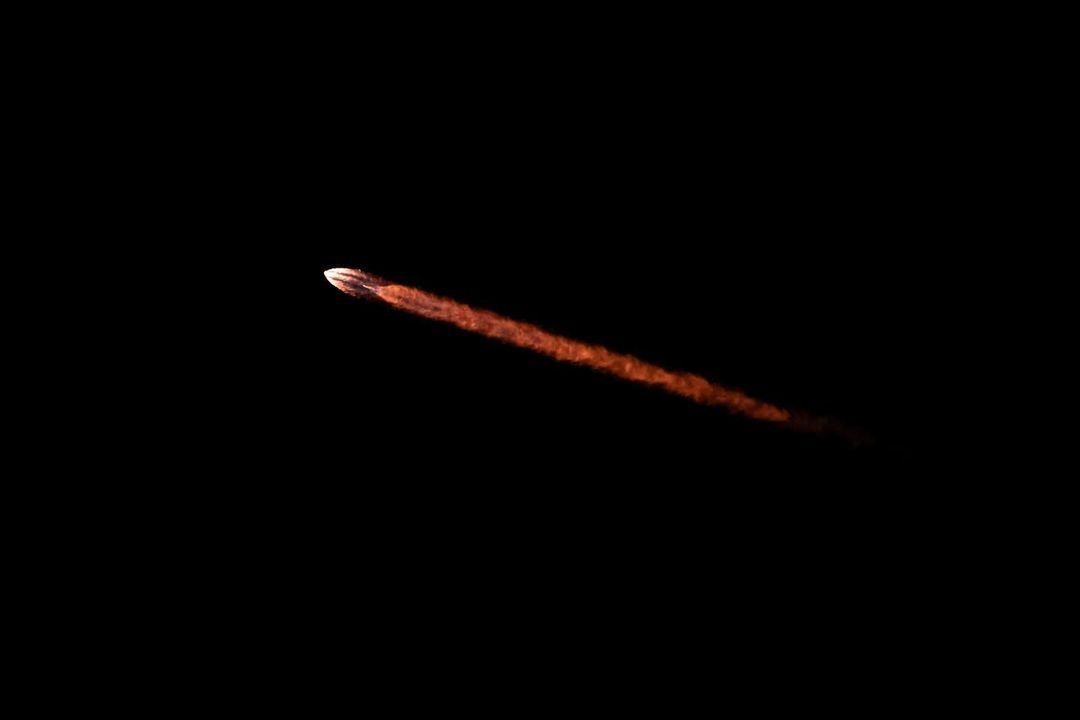
Photo of last night’s Falcon 9 launch of 20 Starlink Satellites to low-Earth orbit (LEO) courtesy of SpaceX on Instagram, @spacex.
Specifically, last night, on Wednesday, Dec. 4, Falcon 9 launched 20 Starlink Satellites, including 13 with direct-to-cell (DTC) capabilities, to LEO from Space Launch Complex 4 East (SLC-4E) at Vandenberg Space Force Base in California.
Per SpaceX Founder and CEO Elon Musk’s X account, @elonmusk, the satellite launch marked the completion of the first Starlink satellite Direct to Cell constellation, enabling “unmodified cellphones to have internet connectivity in remote areas.”
“Bandwidth per beam is only ~10Mb, but future constellations will be much more capable,” Musk said in the post on X.
The Starlink launch marked the 12th flight for the first stage booster supporting the mission, which previously launched Crew 7, CRS-29, NROL-186, EarthCARE, PACE, Transporter-10, and now six Starlink missions, according to SpaceX.
Additionaly, Falcon 9’s landing on the Of Course I Still Love You droneship marked the completion of SpaceX’s 350th flight with a flight-proven booster, according to a post from SpaceX’s X account, @spacex.

Photo of last night’s Falcon 9 launch of 20 Starlink Satellites to low-Earth orbit (LEO) courtesy of SpaceX on Instagram, @spacex.
As for this morning’s SXM-9 launch, Falcon 9 took off to GTO from Launch Complex 39A (LC-39A) at Kennedy Space Center. The launch marked the 19th flight for the Falcon 9 first stage booster supporting the mission, which previously launched CRS-26, OneWeb Launch 16, Instelsat IS-40e, O3B mPOWER, Ovzon 3, Eutelsat 36D, Turksat 6A, Maxar 2, and 10 Starlink missions, per SpaceX.