SpaceX Launches Three Missions in Two Days: 22 Starlink Satellites & Intuitive Machines IM-1 Mission Today, USSF-124 Yesterday
A big two days for SpaceX with three launches, from Vandenberg Space Force Base in California (Starlink), Kennedy Space Center in Florida (IM-1) and Cape Canaveral Space Force Station in Florida (USSF-124).
(California & Florida) Elon Musk’s SpaceX has launched three missions in a time frame of less than 24 hours over the past two days:
- (1) most recently, today, February 15th, at 1:34pm PST / 4:34pm EST, Falcon 9 launched 22 Starlink Satellites to low-Earth orbit (LEO) from Space Launch Complex 4 East (SLC-4E) at Vandenberg Space Force Base in California;
- (2) earlier today, February 15th, at 1:05am EST, a Falcon 9 rocket launched the Intuitive Machines (NASDAQ: LUNR) IM-1 mission to lunar transfer orbit from Launch Complex 39A (LC-39A) at Kennedy Space Center in Florida (shares of LUNR rose 34.54% today to $6.70 at the close, and are currently above $7.00 in after-hours trading);
- (3) yesterday, February 14th, at 5:30pm EST, Falcon 9 launched the USSF-124 mission to LEO from Space Launch Complex 40 (SLC-40) at Cape Canaveral Space Force Station in Florida.
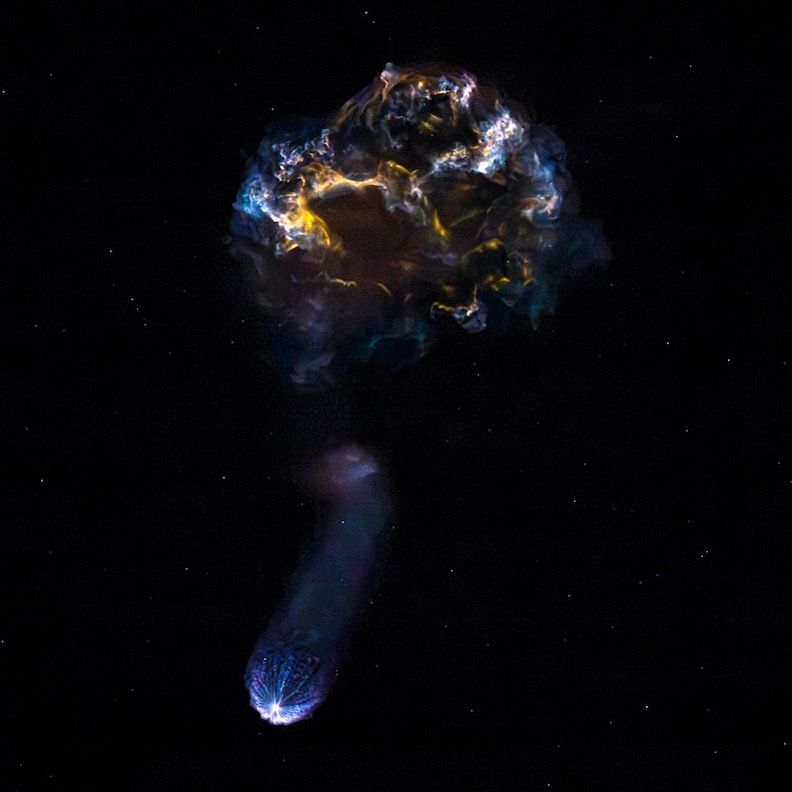
Photo of SpaceX’s Falcon 9 stage separation “nebula” as the Intuitive Machines IM-1 lunar lander headed toward the Moon during this morning’s 1:05am EST launch from Florida courtesy of John Krauss on Instagram, @johnkraussphotos.
Starlink Mission
Today’s Starlink mission – SpaceX’s third mission in a period of less than 24 hours – marked the second flight for its Falcon 9 first stage booster, which has now launched two Starlink missions.
The Falcon 9’s first stage returned to Earth about 9.5 minutes after liftoff, as planned, making a vertical landing on the Pacific Ocean-stationed SpaceX drone ship Of Course I Still Love You, according to Space.com. Meanwhile, the rocket’s upper stage powered skyward to deploy the 22 SpaceX satellites into LEO.
Details on each of the launches is as follows:
(1) Starlink Mission
Today’s Starlink mission – SpaceX’s third mission in a period of less than 24 hours – marked the second flight for its Falcon 9 first stage booster, which has now launched two Starlink missions.
The Falcon 9’s first stage returned to Earth about 9.5 minutes after liftoff, as planned, making a vertical landing on the Pacific Ocean-stationed SpaceX drone ship Of Course I Still Love You, according to Space.com. Meanwhile, the rocket’s upper stage powered skyward to deploy the 22 SpaceX satellites into LEO.
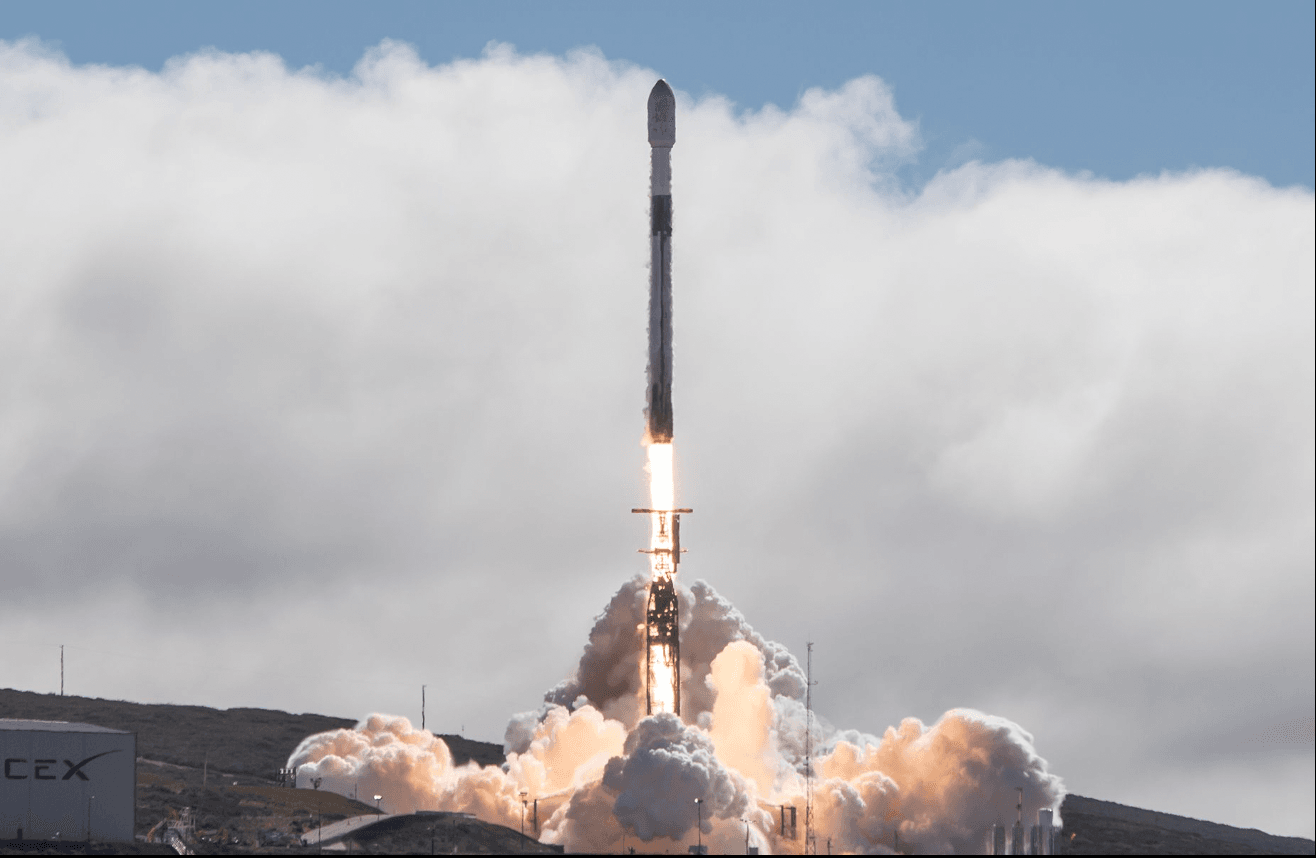
Photo of SpaceX’s Falcon 9 launching today’s Starlink mission, courtesy of SpaceX.
(2) Intuitive Machines IM-1 Mission
Today’s IM-1 mission marks a potentially history-making private moon mission: Odysseus, a robotic lunar lander built by Houston-based Intuitive Machines, lifted off atop a SpaceX Falcon 9 rocket from NASA’s Kennedy Space Center this morning. If all goes according to plan, Odysseus will touch down near the moon’s South Pole on February 22nd and become the first-ever private spacecraft to achieve a successful lunar landing, marking the first time the United States has reached the moon since NASA’s 1972 Apollo 17 mission.
The IM-1 mission marked the 18th flight of the first stage Falcon 9 booster supporting the mission, which previously launched GPS III-3, Turksat 5A, Transporter-2, Intelsat G-33/G-34, Transporter-6, and 12 Starlink missions.
(3) USSF-124 Mission
On Valentines Day, February 14th, at 5:30pm EST, SpaceX’s Falcon 9 launched the classified USSF-124 mission for the United States Space Force, sending six satellites to orbit from Cape Canaveral, Florida.
Falcon 9’s first stage returned to Earth for a vertical touchdown at Cape Canaveral eight minutes after liftoff, according to Space.com, marking SpaceX’s 272nd landing of an orbital-class rocket.
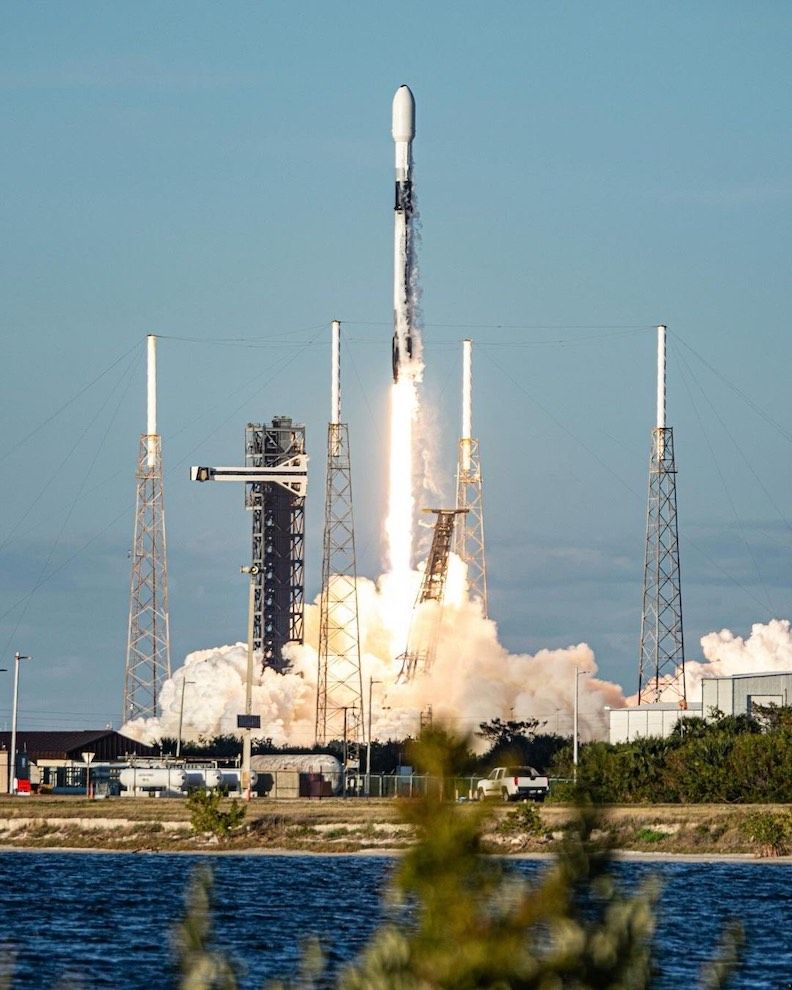
Photo courtesy of SpaceX’s USSF-124 mission courtesy of Michael Cain on Instagram, @mdcainjr.
USSF-124 marked the 18th flight of the first stage booster supporting this mission, which previously launched GPS III-3, Turksat 5A, Transporter-2, Intelsat G-33/G-34, Transporter-6, and 12 Starlink missions.
A statement from the Space Force revealed that USSF-124 was sending six satellites to orbit — two for the Missile Defense Agency and four for the Space Development Agency — but did not describe the spacecraft or their envisioned orbital duties, according to Space.com
** Not investment advice; The FLY Report is not a registered investment advisor.