
Ryanair and Italy’s Enilive Sign LOI for Long-Term Supply of Enilive SAF
The agreement will enable Ryanair to access up to 100,000 tons (33 million gal) of SAF from Enilive at select Ryanair airports across Italy from 2025 to 2030.
(Italy) European airline Ryanair (NASDAQ: RYAAY) and Enilive, integrated energy company Eni’s (NYSE: E) mobility company, announced today that they have signed a letter of intent (LO) for the long-term supply of Enilive sustainable aviation fuel (SAF) at select Ryanair airports across Italy, enabling Ryanair to access up to 100,000 tons (33 million gallons) of SAF between 2025 and 2030.
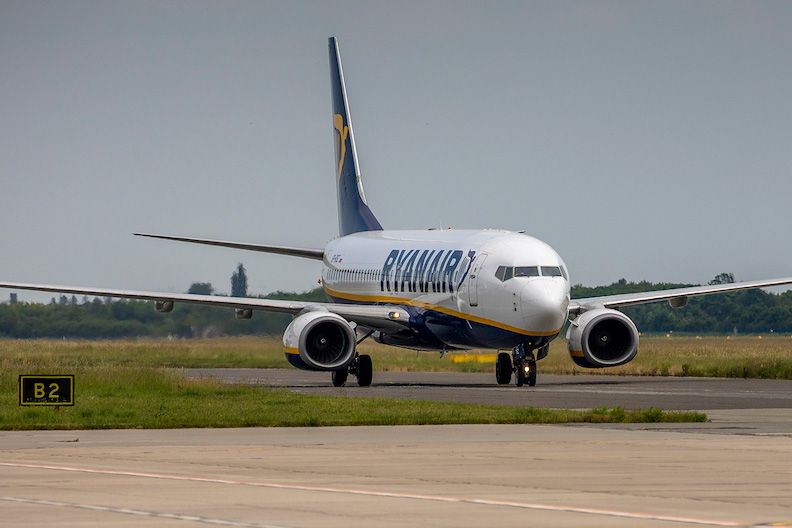
Photo of Ryanair aircraft on the runway courtesy of Ryanair.
The deal was struck in the interest of advancing Ryanair’s Pathway to Net Zero by 2050 decarbonization strategy, according to a press release from Ryanair. The amount of SAF involved in the LOI is equivalent that required for 20,000 flights from Milano Malpensa Airport to Dublin.
Produced in biorefineries in Italy, Enilive’s Eni Biojet, a SAF that contains 100% biogenic component and is suitable to be blended with conventional jet fuel by up to 50%, is made primarily from waste feedstock, such as cooking oil, animal fats and agro-food industry residues.
“Increasing the production of SAF is a key challenge that the industry faces over the coming years,” said Ryanair’s Director of Sustainability Thomas Fowler. “Partnering with an industry leader like Eni will help Ryanair achieve our ambitious goal of using 12.5% SAF by 2030 and Net Zero emissions by 2050. Eni is a key supplier in our largest market, Italy, and their success in producing SAF will play a significant role as our Group grows to carry 300m passengers p.a. by 2034.”
Stefano Ballista, Enilive’s Chief Executive Officer, commented: “We are glad to launch an agreement with such a relevant player as Ryanair right after European Union’s ReFuelEU regulations that aims to increase the adoption of SAFs by 2050. Enilive plans to boost its biorefining capacity to over 5 million tonnes/year by 2030 and it is focused in developing new projects to expand its biorefining capacity: biofuels can play a relevant role in decarbonizing mobility, including its hard-to-abate sectors such as aviation."


