
Peregrine 1 Misses Moon Landing Due to Fuel Leak
Astrobotic Technology abandoned its attempt to land its Peregrine spacecraft on the moon yesterday.
(Pittsburgh, Pennsylvania) Yesterday, Astrobotic Technology, the company that developed the first lunar lander to launch from the United States in five decades, abandoned its attempt to land its Peregrine spacecraft on the moon less than 24 hours after the vehicle took flight due to what was described as critical propellant launch from a fuel link, according to the company.

Photo of Peregrine 1 taking off on a ULA rocket courtesy of Astrobotic on X, @astrobotic.
A potential moon landing had previously been slated for February 23, 2024, according to CNN.
Yesterday afternoon, Astrobotic shared the first image of the Peregrine lander in space; the photo showed that the outer layers of insulation on the vehicle were crinkled, providing “the first visual clue that aligns with our telemetry data pointing to a propulsion system anomaly,” the company tweeted in a post on X at 4:12 p.m. EST yesterday.
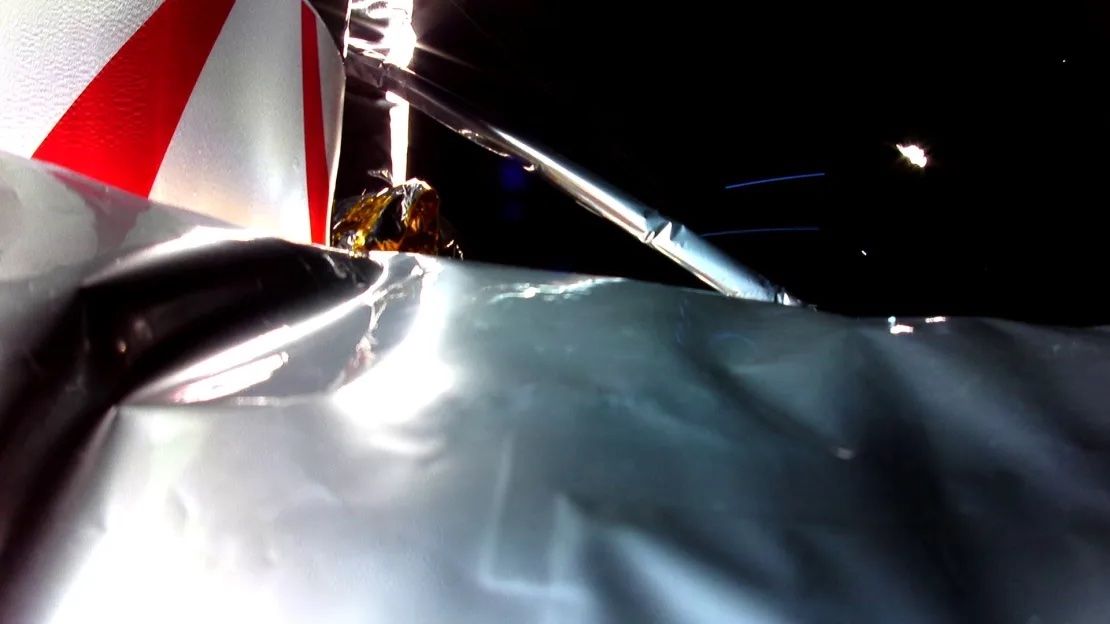
Photo courtesy of Astrobotic on X, @astrobotic.
Earlier on Monday morning, the lunar lander had appeared to have a successful first leg of its trip after lifting off at 2:18am EST atop a Vulcan Centaur rocket developed by United Launch Alliance (ULA), marking a successful first-ever flight of a Vulcan Centaur rocket (a new vehicle from ULA designed to replace its older lineup of rockets).
The launch also marked the first-ever use of Blue Origin‘s BE-4 engines, two of which powered the Vulcan Centaur rocket. Specifically, the two BE-4 engines, fueled by liquefied natural gas (LNG), powered the first-stage booster spaceward with an assist from two side boosters.
Trouble for the Peregrine lander occurred later in the afternoon, at first when the Peregrine lander experienced an “anomaly” that left the vehicle pointed away from the sun and unable to charge its battery, according to CNN.
While this issue was corrected, an underlying propulsion issue was not – the spacecraft was thereafter unable to use its onboard thrusters and have enough propellant left over to make a soft touchdown on the moon.
Pittsburgh-based company Astrobotic Technology developed Peregrine under a $108 million contract with NASA. The vehicle was designed from the outset to be relatively cheap — aiming to fulfill NASA’s vision to reduce the cost of putting a robotic lander on the moon by asking the private sector to compete for such contracts, according to CNN.
Astrobotic CEO John Thornton told CNN on January 2 that he viewed this first launch as a test mission: “This really is like a 50-50 shots on goal kind of an approach — where it’s really more about the industry succeeding, not any specific one mission,” Thornton said.
Joel Kearns, the deputy associate administrator for exploration at NASA’s Science Mission Directorate,
issued a statement yesterday, saying, “There are many challenges with spaceflight, and we’re incredibly proud of the Astrobotic and NASA teams that have put us one step closer to a robotic return to the lunar surface as part of Artemis. This delivery service model is a first for the agency and with something new, there is a higher risk,” said Joel Kearns, deputy associate administrator for exploration at NASA’s Science Mission Directorate. “NASA is committed to supporting our commercial vendors as they navigate the very difficult task of sending science and technology to the surface of the Moon.”
Onboard the Peregrine vehicle are five scientific instruments from NASA and 15 other payloads from a variety of organizations and countries. The commercial payloads on the lander include mementos and human remains that customers had paid to send to the lunar surface, according to CNN.


