North Carolina Launches First Demo Flights Under USDOT’s Advanced Air Mobility Integration Pilot Program
North Carolina’s launch follows that in Texas earlier this month.
(North Carolina) North Carolina today (Sept. 23) saw its first demonstration flights of next-generation aircraft under the U.S. Department of Transportation’s Advanced Air Mobility Integration Pilot Program, becoming one of the first domestic locations to launch under the Department’s initiative, following Texas earlier this month.
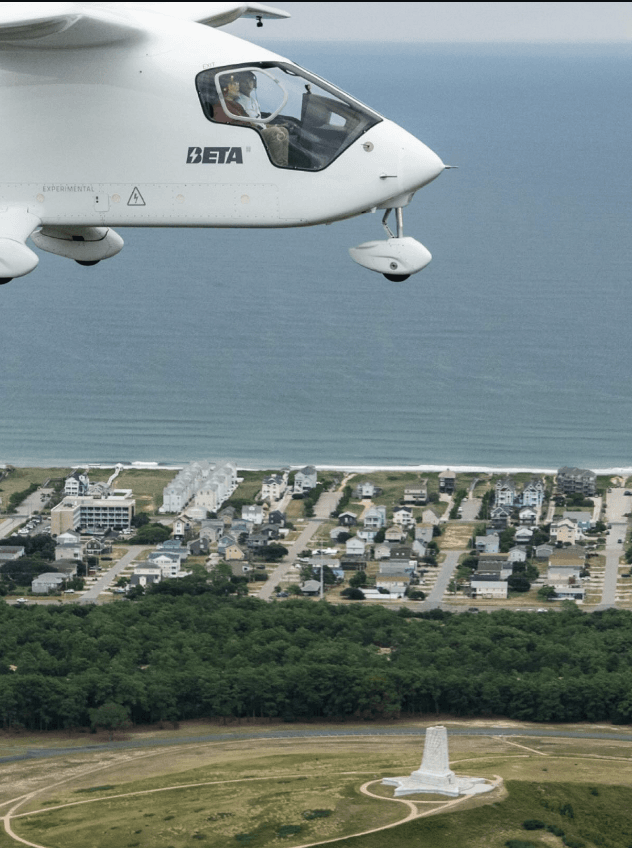
Image of BETA’s ALIA electric aircraft flying over the Wright Brothers Memorial in North Carolina courtesy of BETA on Instagram, @beta.aircraft.
Per today’s press release from the FAA, the first-of-its-kind testing initiative has the potential to create jobs, connect communities, and strengthen American leadership in aviation; data from the pilot projects will be used by the Federal Aviation Administration (FAA) to develop new regulations that safely enable this futuristic technology at scale.
“Under President Trump, we are unlocking the future of flight, one test flight at a time,” said U.S. Transportation Secretary Sean P. Duffy. “More than 120 years after the Wright Brothers took to the skies at Kitty Hawk, North Carolina is again leading the charge to transform how Americans move. Thanks to these tests, we are closer than ever to welcoming next-generation aircraft into our skies.”
Per the FAA, Joby Aviation (NYSE: JOBY), BETA Technologies (NYSE: BETA) and the North Carolina Department of Transportation are collaborating to test regional flight and medical transport capabilities between small local airports and a major hub.
Since September 17, BETA has conducted all-electric operations, including a flyover of the Wright Brothers National Memorial and simulated deliveries of essential healthcare cargo to rural medical access points, including a deployable medical field tent and supplies, according to today’s press release from BETA.
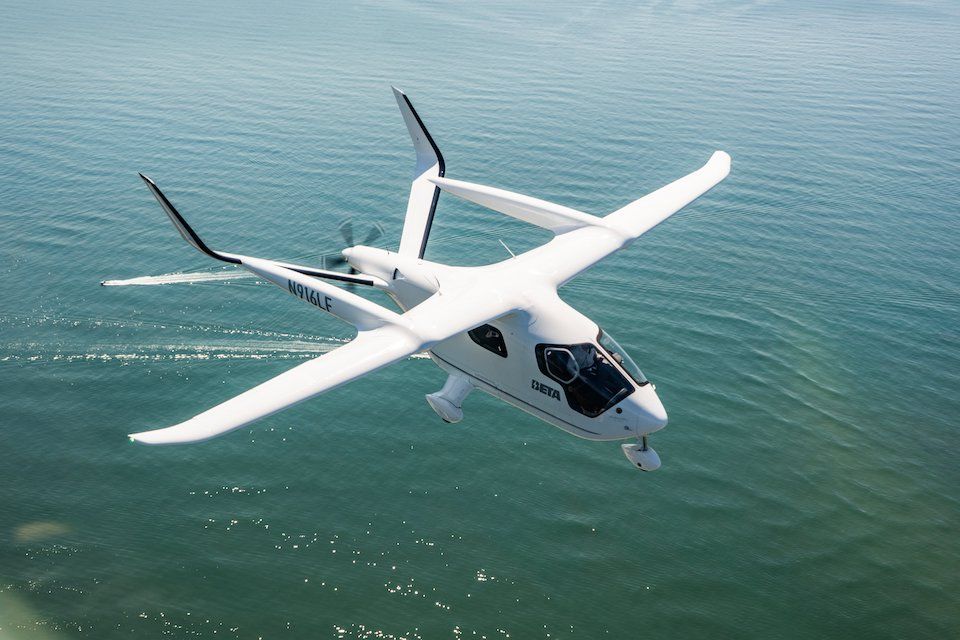
Image of BETA’s ALIA electric aircraft in flight courtesy of BETA Technologies.
These operations will demonstrate how lower-cost, all-electric aviation can reduce the time required to deliver critical supplies, strengthen the resilience of regional healthcare networks, and improve access to care across the state, per BETA.
Specifically, in collaboration the North Carolina Department of Transportation (“NCDOT”), Metro Aviation and healthcare partners across the state, including ECU Health and WakeMed, BETA designed its North Carolina flight campaign to test how electric aviation could strengthen connections between regional medical centers and the rural and coastal communities they serve; the campaign covered more than 1,300 nautical miles and focused on future healthcare missions connecting the Research Triangle, including routes between Raleigh Executive Jetport and Pitt-Greenville Airport, with communities such as those served by Dare County Regional Airport.
“We are supporting North Carolina’s world-class healthcare systems by using cost-effective, electric flight to overcome the distance that can make it difficult to get critical supplies, specialists, and care where they need to go,” said Kyle Clark, founder and chief executive officer of BETA Technologies. “Medical applications have been part of BETA’s DNA from the beginning, and the best way to prove our technology is to put it to work on real missions that deliver for the healthcare community. Alongside our customers and partners, we’re flying and learning from every operation and showing how aviation can extend the reach of healthcare networks to rural and coastal communities across the state.”
The North Carolina eIPP operations will use BETA’s Charge Cube at Raleigh Executive Jetport, which was installed in 2024, according to BETA.
More than 15 additional charging sites are in development across North Carolina, creating the infrastructure needed to test a repeatable model for moving critical supplies and care teams between regional medical centers and community hospitals, per BETA.