
Joby Aviation & NVIDIA to Collaborate on Autonomous Flight Initiative
Joby has been named the launch partner for NVIDIA’s IGX Thor Platform.
(Santa Cruz, California) Joby Aviation, Inc. (NYSE: JOBY) and NVIDIA (NASDAQ: $NVDA) announced today (Oct. 28) a collaboration marked by NVIDIA’s selection of Joby as the sole aviation partner for its new NVIDIA IGX Thor Platform, which is designed to power the next generation of physical artificial intelligence (AI) applications.
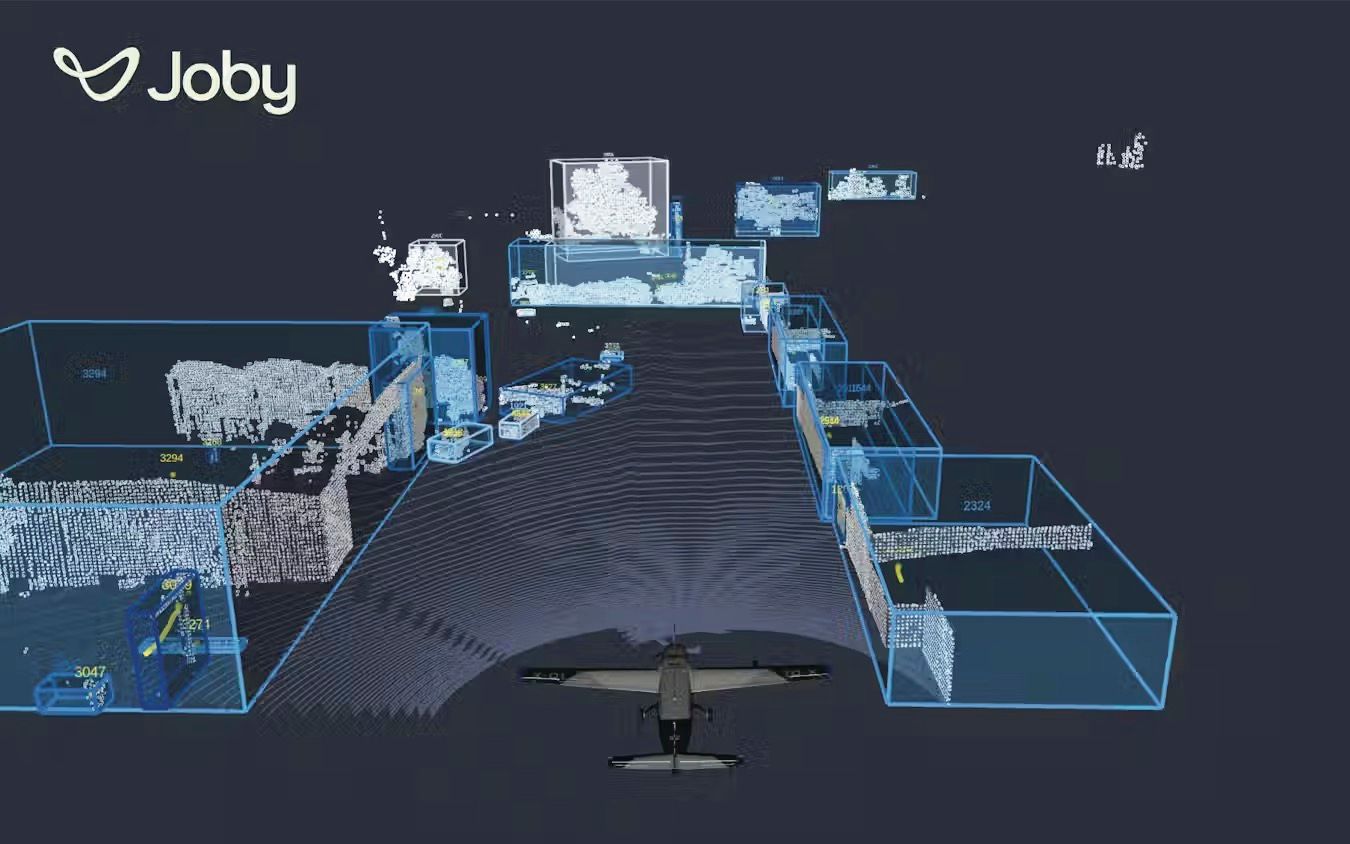
Rendering courtesy of Joby Aviation.
The NVIDIA-Joby collaboration will advance development of Joby’s autonomous flight technology Superpilot™ across military and civil platforms, according to this afternoon’s press release from Joby.
“The autonomous systems under development at Joby are poised to complement human intelligence by providing speed, precision, and stamina beyond what a person alone is capable of,” said Gregor Veble Mikić, Flight Research Lead at Joby. “To achieve this, an aircraft needs a powerful onboard computer that can interpret extraordinary amounts of information to make decisions in real-time. Combining NVIDIA’s compute power with our world-class aircraft design, certification and rigorous flight testing capabilities, we’re enabling a new era of safety-first autonomy in aviation.”
Per Joby, NVIDIA’s support for industry recognized functional safety standards on the IGX Thor platform allows Joby to pursue certifiable autonomy for near-term defense and long-term civil applications as the Federal Aviation Administration (FAA) advances the capabilities of national airspace. Real-time, on-board capabilities and features which may be achieved via the integration include the following:
- “Autonomous Mission Management: Enables the aircraft to determine, request and follow optimal flight paths, adapt to changes in weather, air traffic control instructions, or unexpected events, with intuitive human-machine teaming to ensure mission success.
- Radar and Perception Processing: Onboard compute processes high-rate data from Radar, LiDAR and Vision sensors to achieve rich environmental awareness, precise object perception and localization to safely navigate the airspace in all conditions.
- Sensor Fusion: Integrated high-performance processing combines data from a diverse range of sensors to deliver reliable and accurate aircraft state estimation and situational awareness in the most challenging environments.
- Predictive System Health Monitoring: The aircraft will be capable of refining models of its own function and reliability, predicting when system components might need attention and alerting crew members before it becomes a problem.
- Digital Twin” Modeling: With powerful and reliable compute capabilities, an aircraft can carry a “digital twin” model of itself, and the world, that gathers data from every flight to refine its fidelity. This information can then be integrated into mission control systems to optimize performance and efficiency.


