
FAA Introduces Its First New Category of Civil Aircraft Operations Since the 1940s: Powered Lift Operations
FAA Administrator Mike Whitaker joined industry leaders at NBAA-BACE today to celebrate the release of new regulations that will help electric aircraft take flight.
(Washington, D.C.) The Federal Aviation Administration (FAA) today issued its final rule for the qualifications and training that instructors and pilots must have to fly aircraft in what it has designated its “powered-lift” category, which encompasses vehicles that maintain characteristics of both airplanes and helicopters, including electric vertical takeoff and landing (eVTOL) vehicles and forthcoming air taxis.
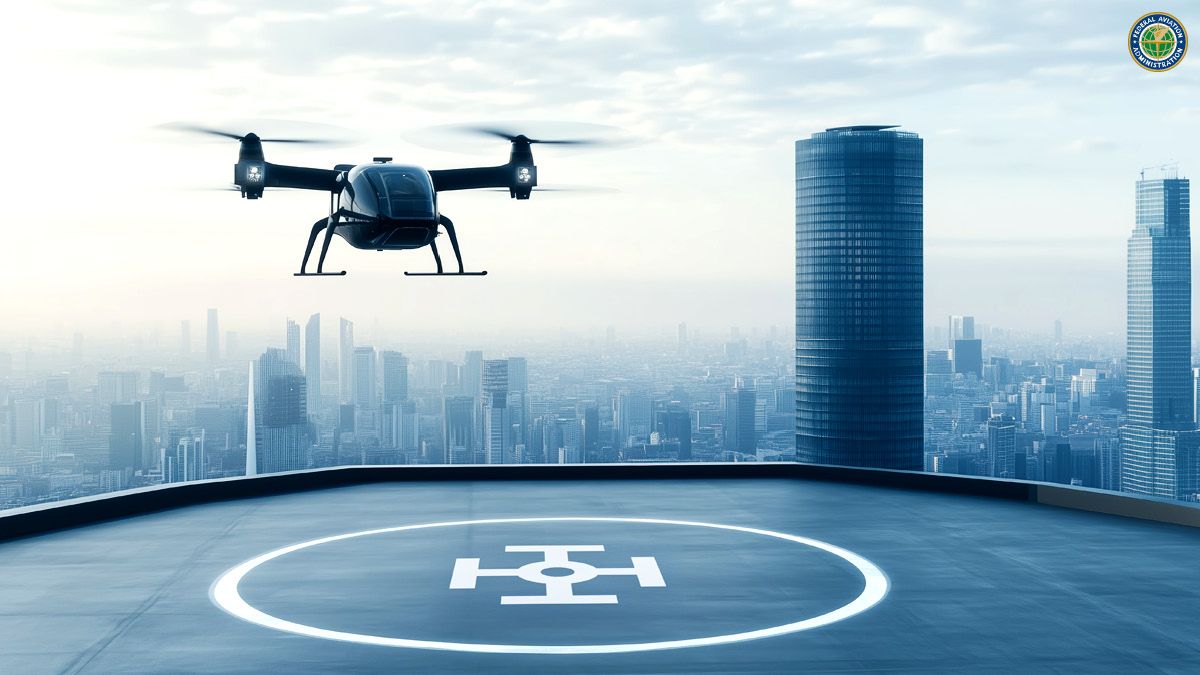
Photo courtesy of a post this morning (Oct. 22) by the FAA on X @faanews.
The rule marks the introduction of the FAA’s first completely new aircraft category introduced to civil operations since helicopters in the 1940s, according to a post by the FAA on Medium today.
The FAA’s final rule reduces the required pilot in command (PIC) flight time in a powered-lift vehicle at the commercial pilot certificate level from 50 hours to 35 hours, of which 15 hours may be in a Level C or higher full flight simulator (FFS); a person who applies for a commercial pilot certificate with a Powered-lift category rating must therefore log at least 250 hours of flight time in total, including his/her powered lift training hours.
Specifically, according to the FAA, the new powered lift rule, which will be in effect for 10 years, does the following:
- Makes changes to numerous existing regulations and establishes a Special Federal Aviation Regulation (SFAR) with new requirements to facilitate instructor and pilot certification and training.
- Applies helicopter operating requirements to some phases of flight and adopts a performance-based approach to certain operating rules.
- Allows pilots to train in powered-lift with a single set of flight controls; legacy rules require two flight controls – one for the student and one for the instructor.
FAA Administrator Mike Whitaker joined industry leaders at the National Business Aviation Association (NBAA)’s Business Aviation Convention & Exhibition (BACE) in Las Vegas, Nevada today to celebrate the release of the new regulations, which will ultimately help electric aircraft take flight. eVTOL developers Joby Aviation (NYSE: JOBY) and Lilium Air Mobility (NASDAQ: LILM) also maintained a presence at the show with large-scale exhibits of their respective eVTOL aircraft.
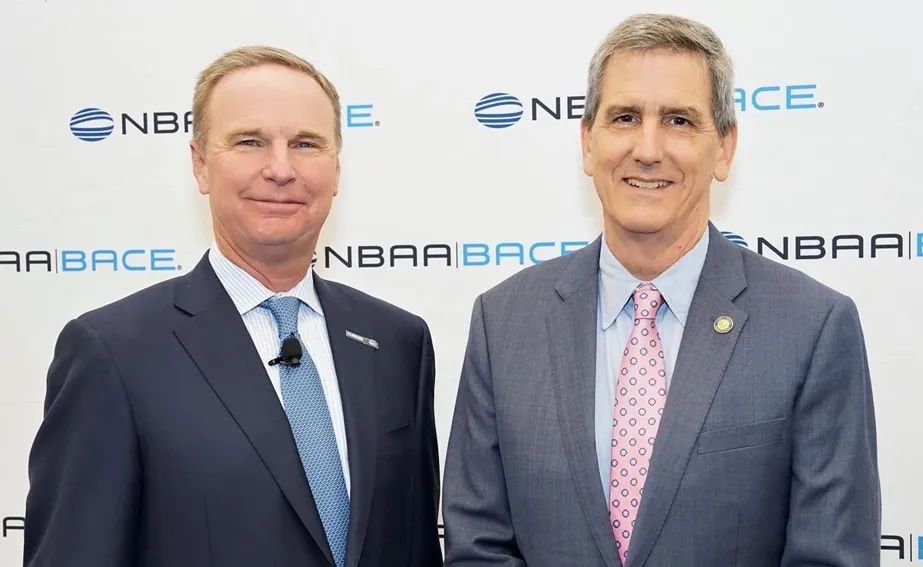
Photo of National Business Aviation Association (NBAA) President Ed Bolen (left) and FAA Administrator Mike Whitaker at the NBAA-Business Aviation Convention and Exhibition today (Oct. 22) in Las Vegas, Nevada, courtesy of the FAA on Medium.
Previously, the FAA had determined that it could certify powered-lift using existing regulations and updated other regulations so that air taxis could be used commercially, but, according to today’s press release from the agency, it was determined that a new pilot-training and qualifications rule was needed because existing regulations did not address the new category of aircraft featuring the characteristics of both airplanes and helicopters.


