Electra and Atlas to Partner on Airframes for EL9 Ultra Short Airplanes
Per today’s press release from Electra, the partnership will pair Electra’s innovative aircraft design with Atlas’s proven aerospace manufacturing expertise as Electra’s flight testing program progresses.
(Manassas, Virginia & Wichita, Kansas) Electra and The Atlas Group announced today (Sept. 15) that they have signed a partnership agreement whereby Atlas will manufacture and assemble EL9 airframes for Electra’s flight test and certification program.
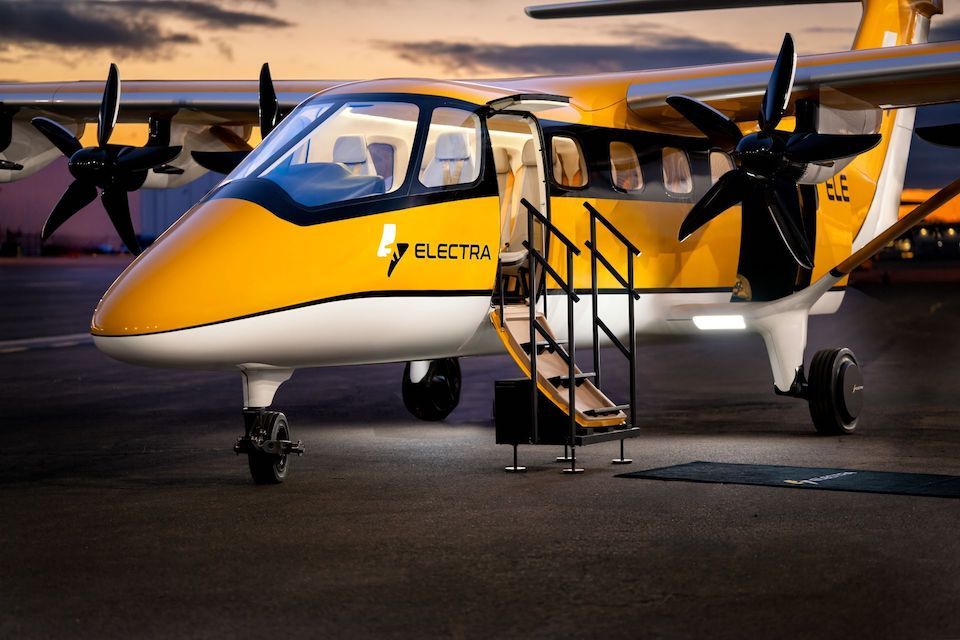
Image of Electra’s EL9 ultra-short aircraft courtesy of Electra.
Work is scheduled to begin this month at Atlas’ facilities, and the first deliveries are expected in 2027, according to today’s press release from Electra.
Per Electra, the two teams will work closely to mature the EL9 production architecture, reduce manufacturing risk, and build the industrial foundation needed to scale output after certification.
“Today’s agreement with Atlas is another great milestone in Electra’s journey to open a new era of aviation,” said Marc Allen, CEO of Electra. “The EL9 is designed to transform how people travel and where aviation serves us all. Realizing this vision requires more than a breakthrough aircraft; it requires the ability to build and deliver it with the consistency and scale of an advanced production system. Atlas, with its manufacturing expertise and aerospace discipline, now joins us in turning the EL9 from a new kind of airplane into a new way of connecting communities.”
Atlas CEO Greg Harwell said: “We are excited to be a part of the Electra team as we engage in transforming a groundbreaking hybrid-electric aircraft concept into a producible, scalable platform. Atlas brings decades of expertise in aerospace manufacturing, industrialization, and supply chain execution to help bridge the gap between innovation and production, ensuring the EL9 is positioned for successful growth and long-term market adoption.”
Electra’s EL9 is a nine-passenger hybrid-electric aircraft designed to take off and land in as little as 150 feet — thereby enabling operations from locations far smaller and closer to where people live, work and travel than conventional airports.