Behind the eVTOL — A Deep Dive with Rick Luebbe, CEO of Group14, Whose Silicon Battery Material Powers Some of Our Favorite eVTOLs (and Many Other Things)
A deep-dive about the phone-, electric vehicle- and eVTOL-supporting battery material-maker Group14 - which has raised almost $1 billion to date - and what exactly is so great about silicon anode batteries.
(Woodinville, Washington) “I don’t envision electric aviation advancing without silicon batteries,” explained silicon battery materials manufacturing company Group14 Technologies Chief Executive Officer Rick Luebbe when I asked why Group14’s next-generation silicon battery technology is so important (and simultaneously apologized for my ignorance).
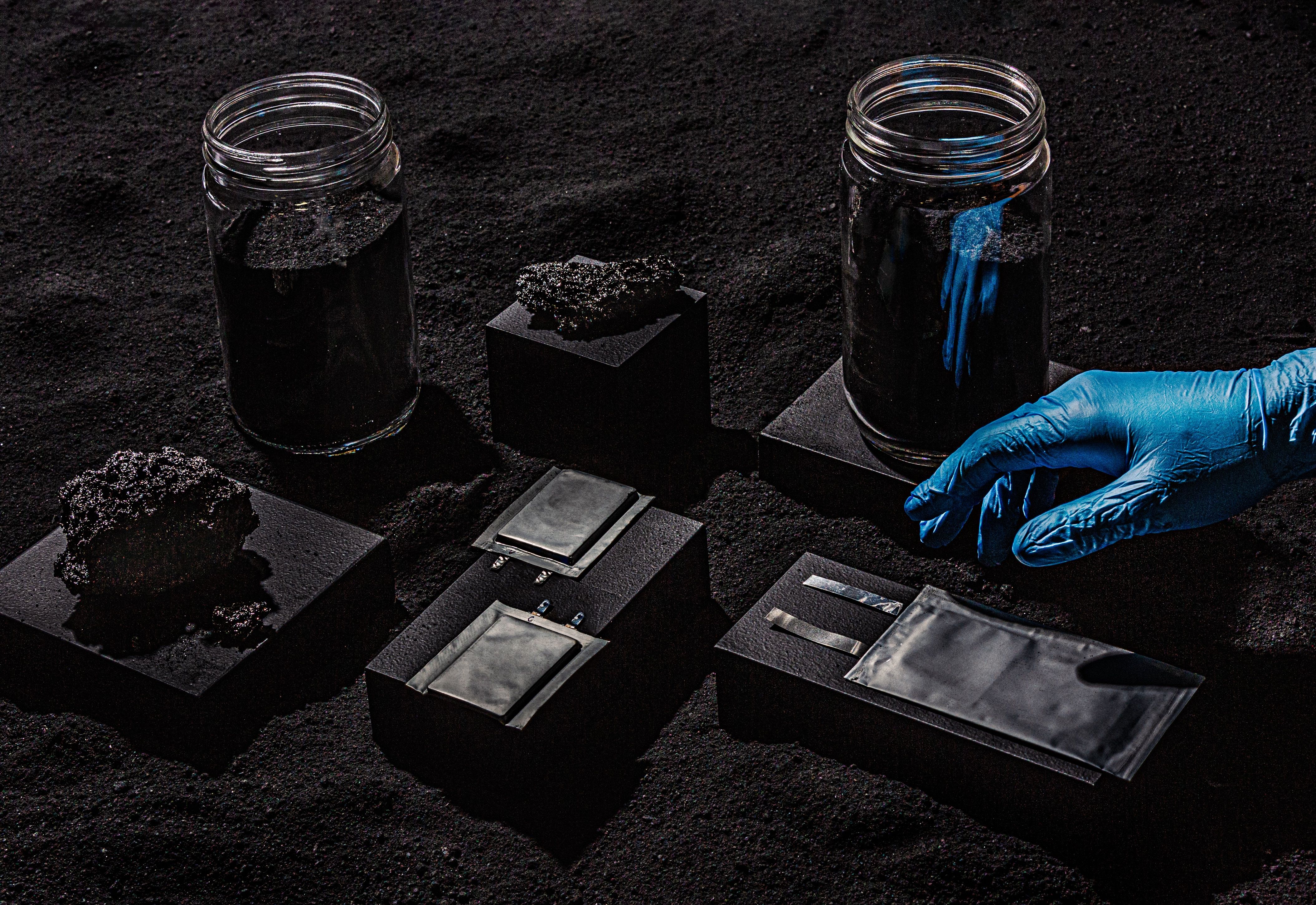
Photo of silicon battery materials manufacturing company Group14’s SCC55 silicon anode material at various stages between manufacturing and deployment – the black rocks show SC555 just after coming out of the kiln; the black powder is SCC55 in the form whereby its shipped to battery manufacturing customers and the rectangular boxes represent some of the battery packs the SCC55 material goes into – courtesy of Group14 Technologies.
Enough said. For background, I introduced myself to Luebbe (and asked for an interview) after learning that his company was partly responsible for powering Archer’s (NYSE: ACHR) Midnight electric vertical takeoff and landing vehicles (eVTOLs), in the interest of learning more about the batteries that will power the next wave of aviation (and by next wave, I mean urban air mobility, including electric and hybrid vehicles).
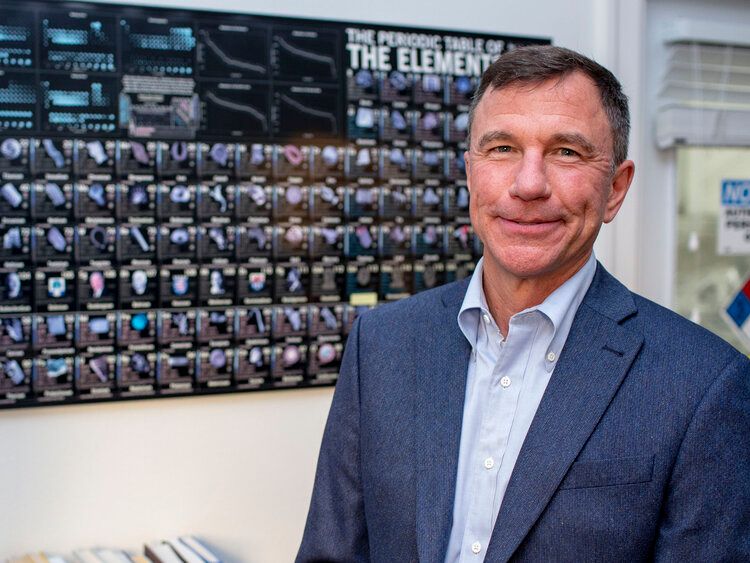
Photo of Group14 Technologies CEO and co-founder Rick Luebbe, courtesy of Group14 Technologies via GeekWire.
Specifically, Archer uses Molicel’s P50B silicon anode batteries, which in turn utilize Group14’s SCC55 silicon anode material.
Other eVTOL developers currently use either in-house developed and/or lower-performance batteries for their test vehicles, but most of the latter group intend to migrate to higher-performance silicon anode batteries over time if they are not already utilizing silicon anode materials, explained Group14 Board of Directors Member and OVP Partners Managing Director Gerry Langeler.
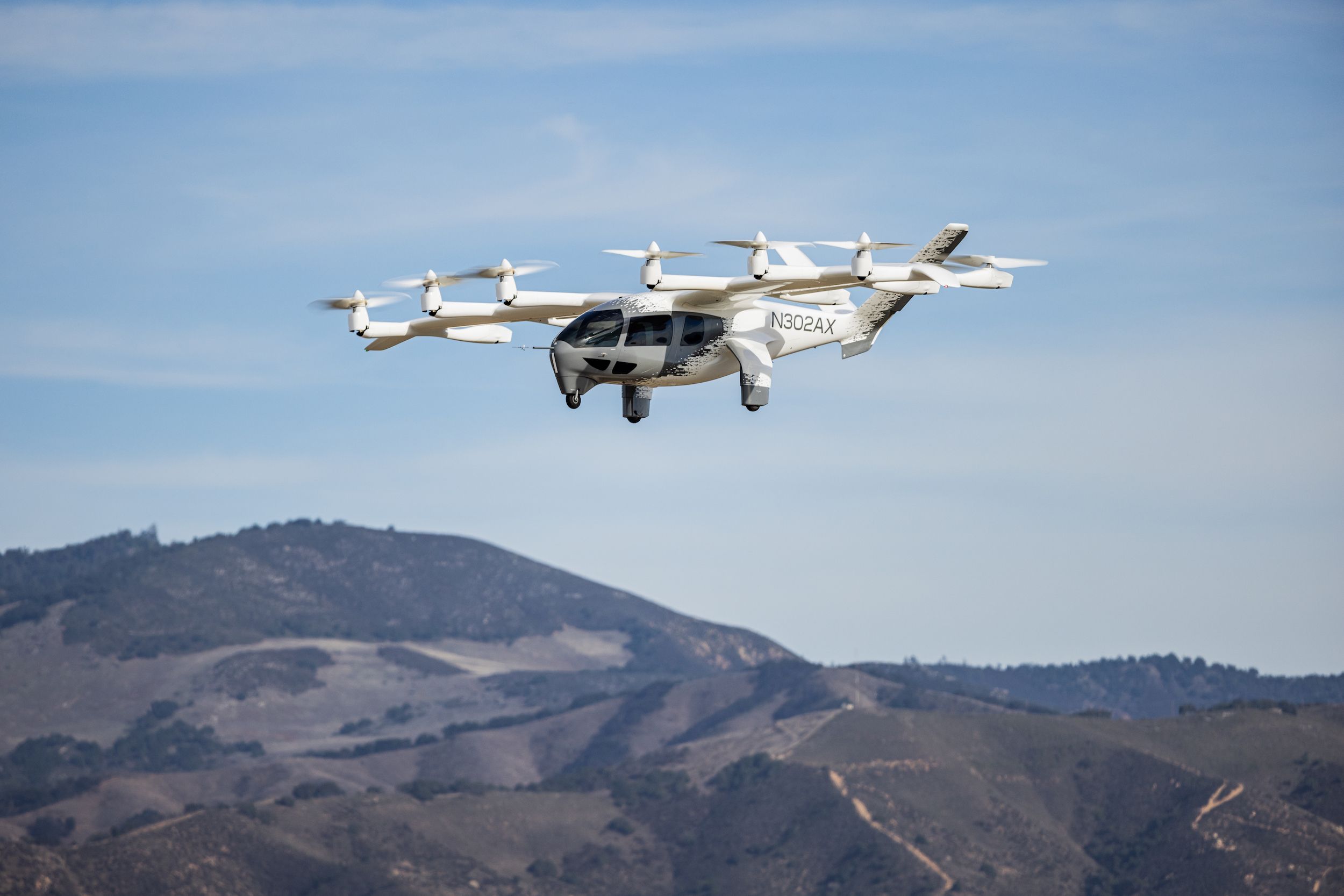
Photo of Archer Aviation’s Midnight electric vertical takeoff and landing (eVTOL) vehicle, which utilizes Molicel’s P50B silicon anode batteries – and in turn utilizes Group14’s silicon anode material – in flight; courtesy of Archer Aviation.
“An even-higher performance battery, the P60B, is due to ship from Molicel this summer,” Langeler said.
For background, in November of 2022, in an initial announcement about its selection of Molicel to supply batteries for Midnight, Archer explained that “Molicel’s advanced battery technology and fast-growing production capacity make them an ideal partner for Archer as it continues on its ramp to commercialization.”
Archer’s November 2022 press release further explained that Molicel’s high-performance cells offer a significant cycle life when utilized in Archer’s battery pack and, as a result, reduce the long-term operating cost for its Midnight production aircraft.
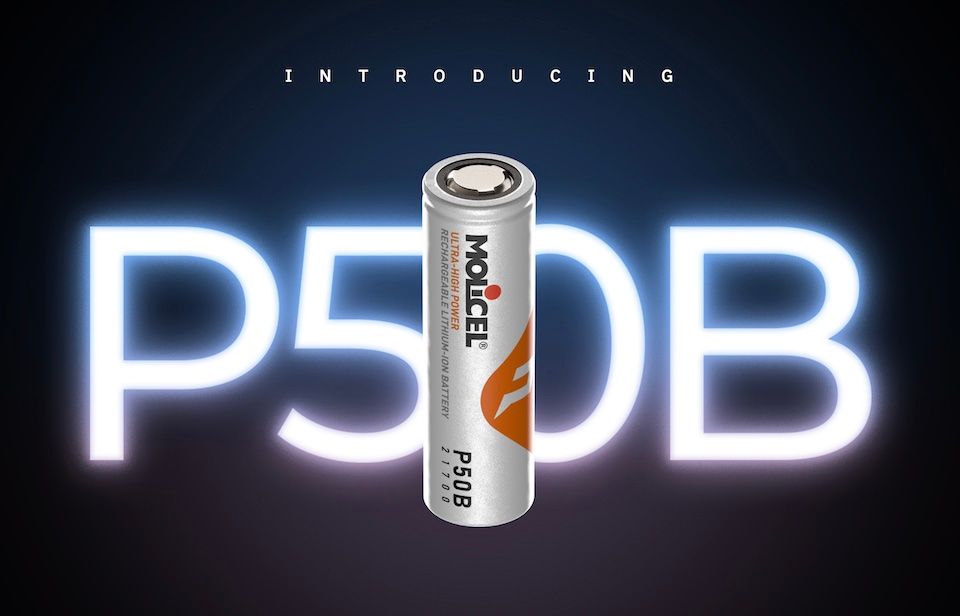
Photo of Molicel’s P50B battery from its website, courtesy of Molicel.
Other eVTOL companies, including Joby Aviation (NYSE: JOBY), are vertically integrated, and have developed their own electric batteries in-house.
With respect to Group14, the company’s silicon battery material – which replaces the graphite traditionally used in lithium-ion batteries – is a key enabling technology for high performance batteries, as silicon batteries maintain 25 – 50% higher energy density vs. traditional models and enable faster charging times.
“Silicon batteries provide 50% more energy [vs. traditional models] and charge in minutes vs. hours – it’s critical to have that energy density for the range requirements of electric aircraft,” Luebbe explained. “If your vehicle is, for instance, at a 60-mile range, you can just drop in silicon batteries and now you’re at 90 miles, just by changing battery cells out in the pack. SCC55 is a drop-in replacement for the graphite used in traditional lithium ion batteries.”
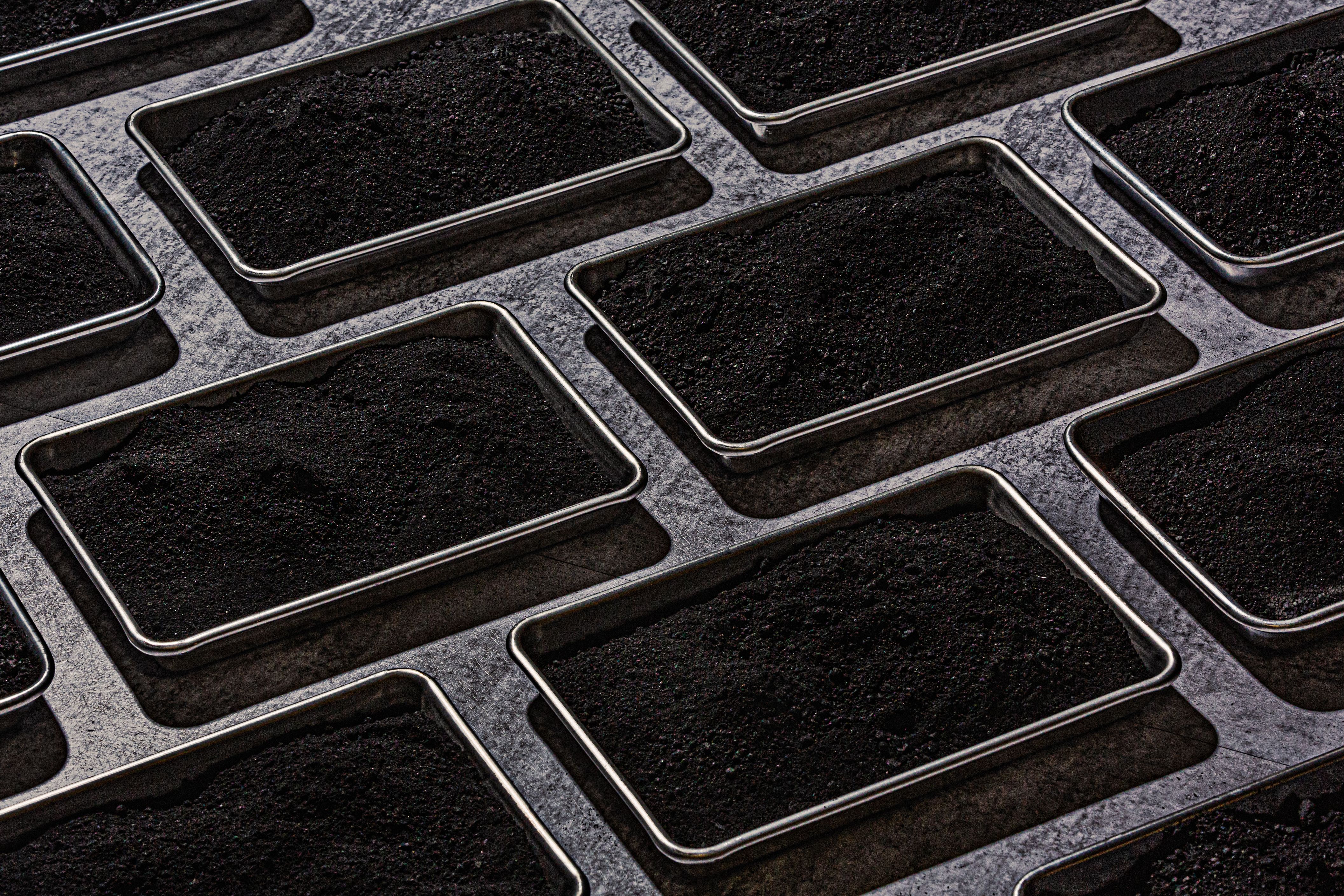
Image of trays of Group14’s silicon battery material SCC55®, courtesy of Group14 Technologies.
A former Army aviation officer who led an aeroscout platoon in Desert Storm and flew Apaches as commander of an Attack Helicopter Company, Luebbe will be one of the first eVTOL and electric aircraft industry participants to be able to pilot a vehicle that he himself was responsible for building, upon the Federal Aviation Administration‘s (FAA) certification of eVTOL aircraft (which is anticipated to be granted early as the end of 2025 by some manufacturers, such as Beta Technologies).
In addition to his army background, Luebbe has spent the last 23 years in the battery and materials space. After working in management consulting at Booz & Company, Luebbe founded EnerG2 – an energy storage company focused on improving lead-acid batteries – which was acquired by BASF in 2016.
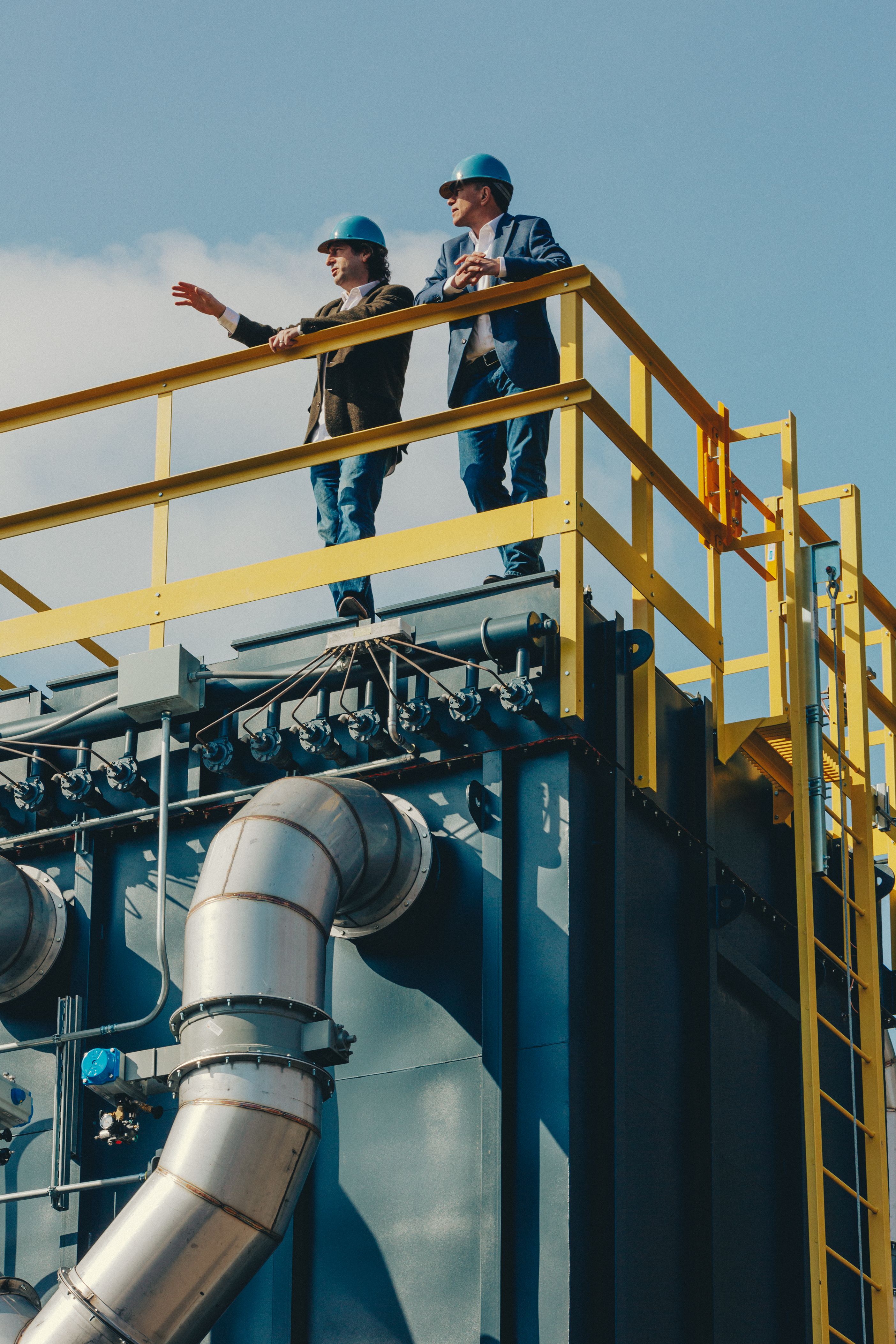
Photo of (left) Dr. Rick Costantino, Group14 Co-Founder and CTO, and (right) Rick Luebbe, Group14 Co-Founder and CEO, at Group14’s first commercial silicon battery materials factory, BAM-1, in Woodinville, Washington, courtesy of Group14 Technologies.
Luebbe’s Group14 has raised about $950 million in funding to date and maintains 350 employees and operations in Washington and near Seattle. Additionally, the company maintains operations in Germany and participates in a joint venture operation in Korea with SK Group.
SK Group is also one of Group14’s investors, having participated in Group14’s Series C round of $614 million in 2022, which was led by Porsche AG. Additional key investors include Microsoft’s Climate Innovation Fund, OMERS Capital Markets, Decarbonization Partners, Riverstone Holdings LLC, Vsquared Ventures, Moore Strategic Ventures, Amperex Technology Limited (ATL), BASF, Cabot Corporation, Showa Denko, SK Inc., Lightrock Climate Impact Fund, and Oman Investment Authority.
Group14 has also received two grants from the U.S. Department of Energy (DOE): in 2022, the company was awarded a $100 million grant to help build its first commercial-scale factory in Moses Lake, and, in 2023, it was selected for negotiation for an additional $200 million DOE award to support the construction of an advanced silane factory.
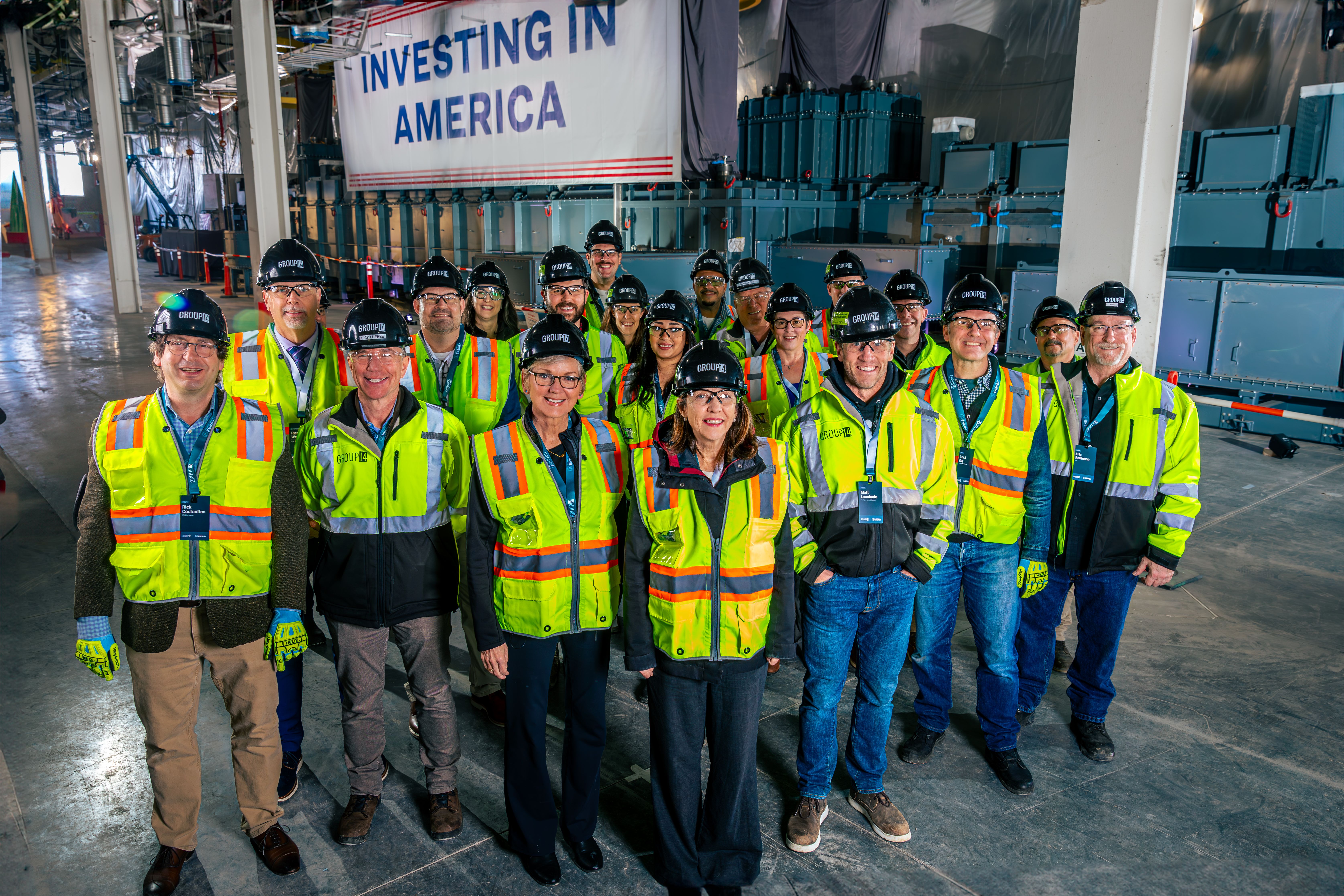
Image of the Group14 team at Group14’s BAM-2 factory in Moses Lake, Washington, in February of 2024, when the company hosted U.S. Department of Energy (DOE) Secretary Jennifer Granholm, Washington State Governor Jay Inslee, U.S. Senator Maria Cantwell, and other dignitaries (all pictured), for a tour of the facility; courtesy of Group14 Technologies.
As Group14’s three new production modules – two in Moses Lake and the joint venture with SK Group in South Korea – come online, they will provide a total of 30 gigawatts of battery materials, or the equivalent of 500,000 electric vehicles worth of batteries, according to Luebbe.
With respect to aviation, specifically, electrified aviation needs silicon batteries (vs. other battery types) because weight and density are the two largest constraining factors when it comes to battery power; silicon provides a 50% boost in energy density at the same weight as other materials.
Silicon, therefore, enables aircraft to “do a lot more than they could with traditional batteries,” Luebbe explained.
“This is not just a piloted aircraft thing,” Langeler said. “Drone-maker Flying Basket, for instance, is also using Molicel’s P50B for their heavy lift drones.”
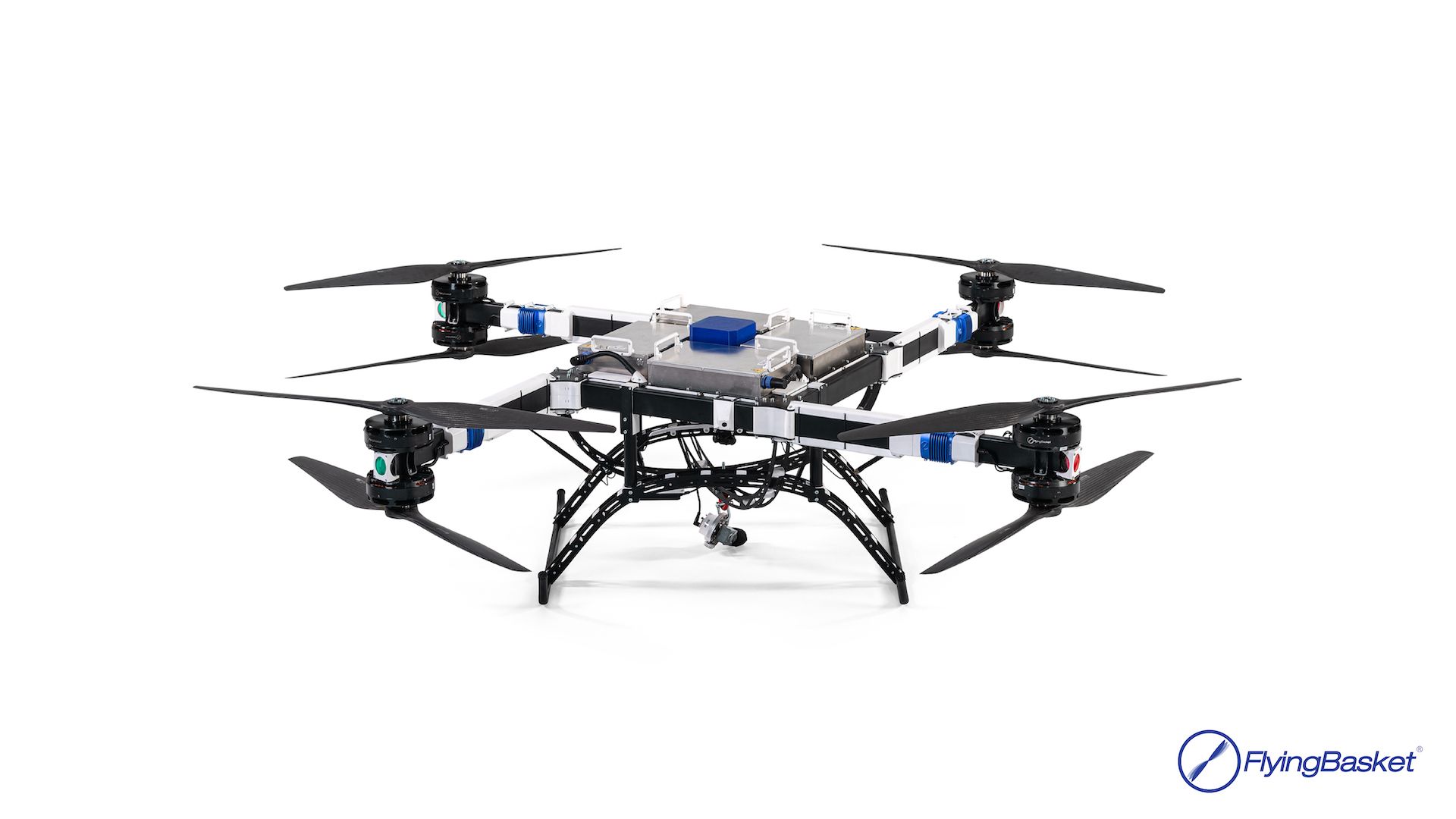
Photo of Flying Basket’s FB3 heavy cargo drone, which utilizes Molicel’s P50B silicon anode batteries – which in turn utilize Group14’s silicon anode material – courtesy of Flying Basket.
In fact, Group14’s website describes the company’s mission as “ushering in the electrification of everything.”
“Group14 is scaling innovation and manufacturing to make batteries do more for everyone,” reads the mission statement on Group14’s website.
“What we are seeing for customers is that we can’t build plant capacity as fast as demand is coming in,” Langeler said. “Demand is coming from a variety of applications including electric vehicles – first and foremost – consumer electronics and eVTOLs.”
Consumer electronics players utilizing Group14’s SCC55 silicon anode material include Honor – to date, millions of the company’s Magic7 Pro smartphones have been rolled out and are currently using the material in China.
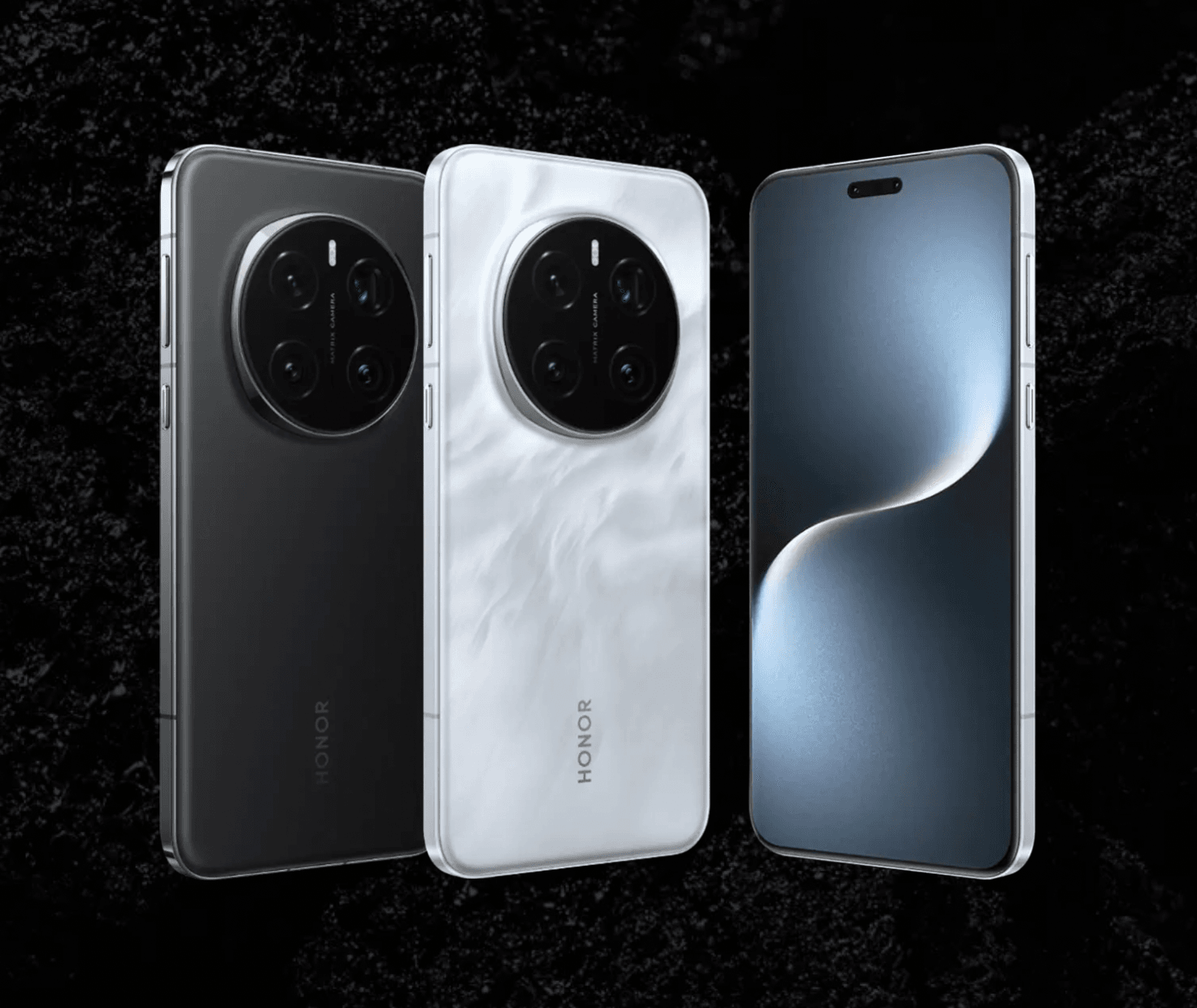
Photo of Honor’s line of Magic7 Pro smartphones, which utilize Group14’s silicon anode material; courtesy of Group14.
Additionally, McMurtry Automotive’s £995,000 Spéirling Pure hypercar – dubbed the fastest race car in the world – uses Molicel’s P50B, and therefore Group14’s silicon anode material.
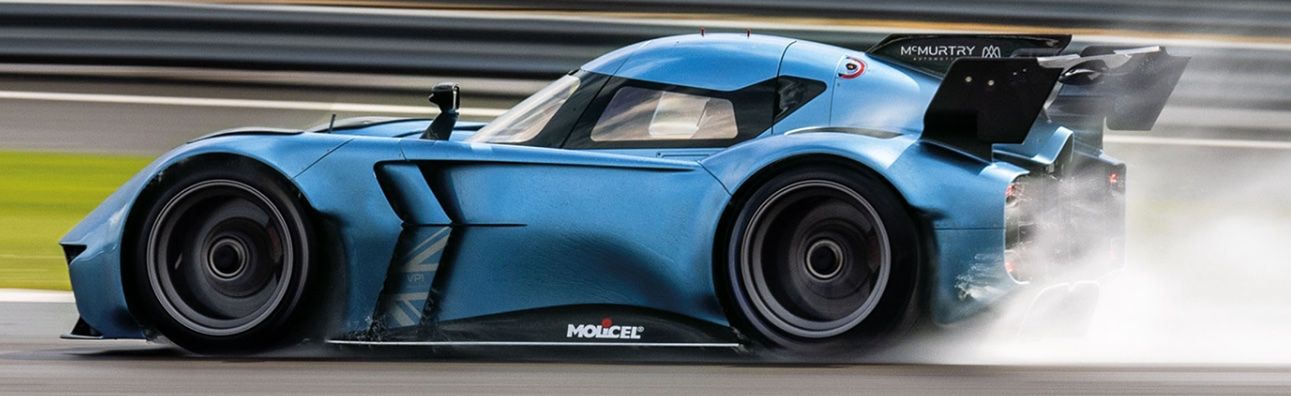
Photo of McMurtry Automotive’s Spéirling Pure hypercar, which utilizes Molicel electric batteries – and in turn utilizes Group14’s silicon anode material – courtesy of Group14.
Going forward, Group14’s silicon anode material will also become increasingly important for artificial intelligence (AI) applications, Langeler explained; given that AI is something of a “power hog,” as smartphones incorporate AI technology, they will need more power and therefore a product that matches or is similar to Group14’s technology.
Given tremendous demand for Group14’s silicon anode material, Luebbe explained that at this time, his company is primarily focused on scale.
“We need to be able to make enough silicon anode material to support large-scale programs,” he explained.
“Personally, I’m a huge fan of electrified aviation, and I’m looking forward to the first commercial or private electrified vehicle becoming available, which will be a lot sooner than we think,” Luebbe added.