
Axiom Space and Nokia Partner to Enable High-Speed Cell Network in Next-Gen Spacesuits
Axiom Space has partnered with Nokia to integrate advanced 4G/LTE communication capabilities into the next-gen spacesuits that will be used for NASA’s Artemis III lunar mission.
(Houston, Texas & Espoo, Finland) Space exploration, development and suit-building company Axiom Space and Nokia (NYSE: NOK) announced today that they have partnered to incorporate high-speed cellular-network capabilities in the next-generation spacesuits that will be used for NASA’s Artemis III lunar mission, which is scheduled to launch in September of 2026.
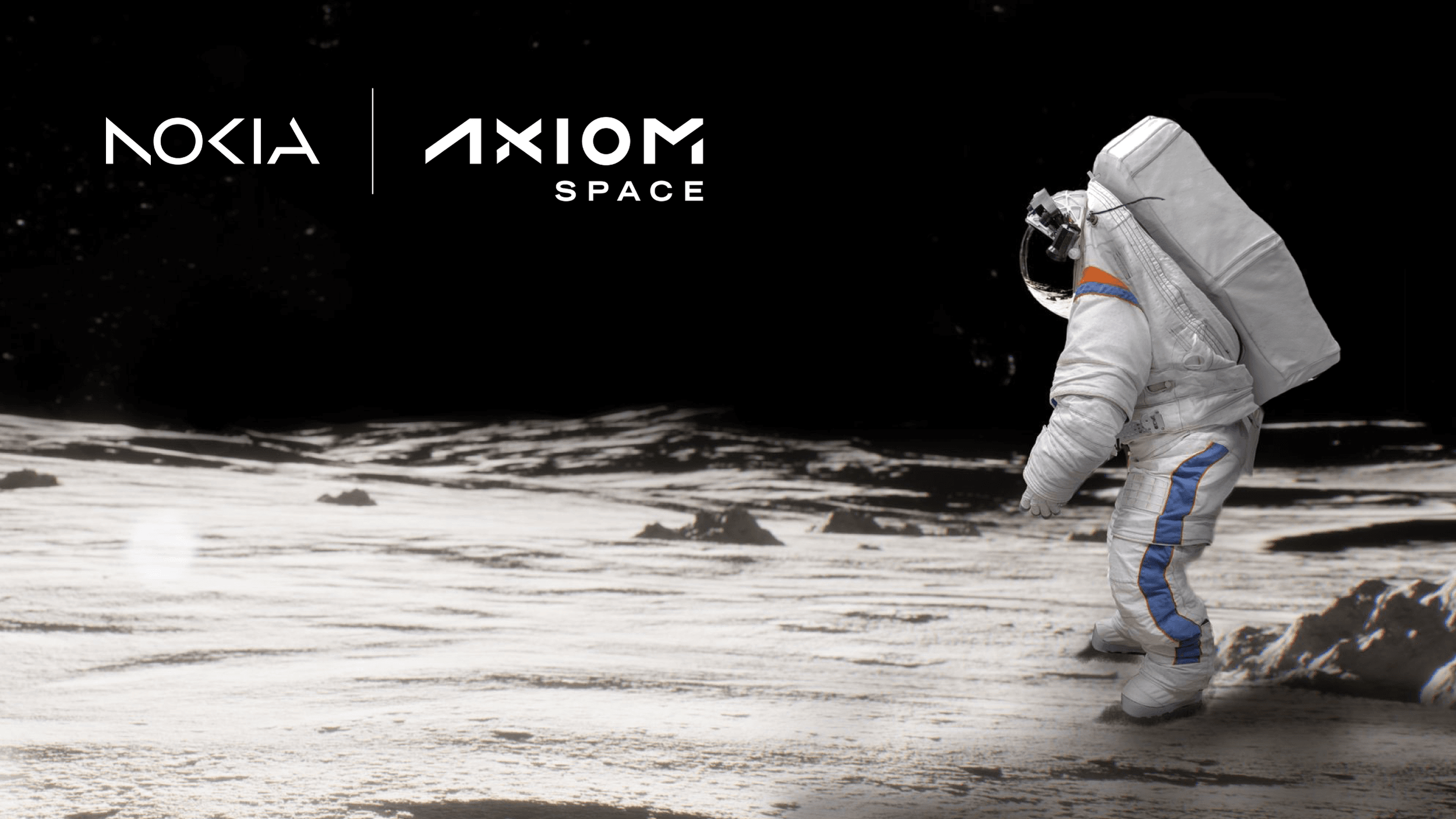
Rendering of an astronaut wearing an Axiom Extravehicular Mobility Unit (AxEMU) spacesuit on the moon courtesy of Axiom Space.
Specifically, Axiom and Nokia are working to integrate a high-speed 4G/LTE cellular-network capability into the Portable Life Support System (PLSS), or “backpack” on the Axiom Extravehicular Mobility Unit (AxEMU) spacesuit, according to today’s press release from Axiom. Specifically, the cellular network apabilities will support HD video, telemetry data and voice transmission over multiple kilometers on the Moon, and will enable Artemis III crew members to capture real-time video and communicate with mission controllers on Earth while they explore the lunar surface.
“Axiom Space is excited to work with Nokia to build on the advanced capabilities of our next-generation spacesuit,” said Russell Ralston, Axiom Space’s Executive Vice President of Extravehicular Activity. “Adding high-speed 4G/LTE network capability on the Moon will serve as a vital bridge linking astronauts to Earth, facilitating crucial data exchange, and enabling high-definition video communication over long distances.”
NASA’s Artemis III mission will build on the crewed Artemis II (scheduled to launch in September of 2025) flight test, adding new capabilities with the human landing system and advanced spacesuits to send the first humans to explore the lunar South Pole region of the Moon, per NASA.
Axiom Space was recently awarded $57.5 million from NASA to make the 4G/LTE network modification to the lunar spacesuit for the Artemis III mission, building upon its first Artemis task order in 2022, which is valued at $228 million, per Axiom.
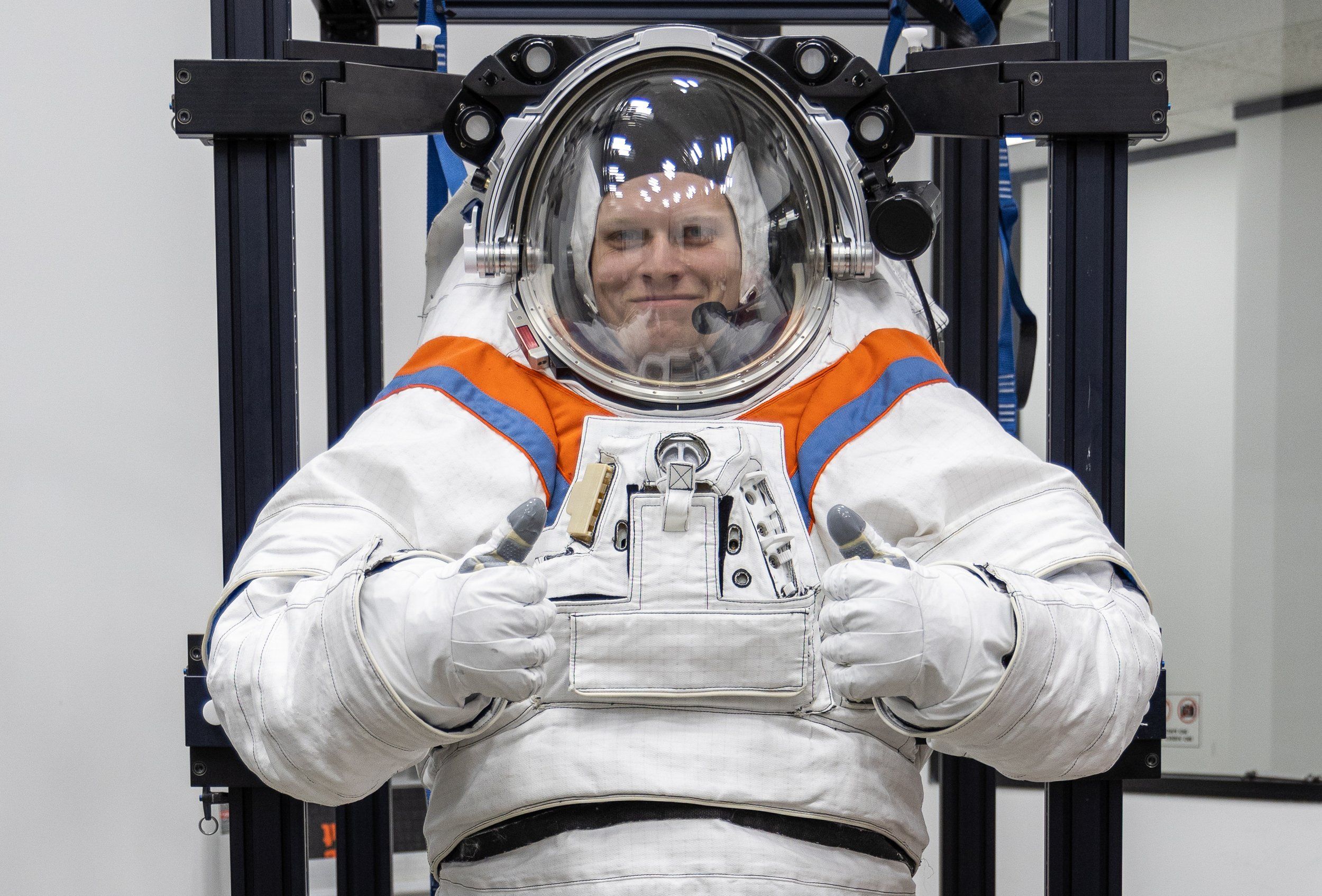
Photo of an astronaut testing the Axiom Extravehicular Mobility Unit (AxEMU), which will support HD video, telemetry data and voice transmission over multiple kilometers on the Moon, courtesy of Axiom Space.
Nokia plans to deploy the first cellular network on the Moon as part of Intuitive Machines’ (NASDAQ: LUNR) IM-2 mission, which is scheduled to be delivered to the launch site in 2024, according to Axiom.
During the IM-2 mission, Nokia aims to demonstrate that cellular connectivity can facilitate crucial communications during future lunar or Mars missions. Per Axiom, Nokia’s Lunar Surface Communications System (LSCS), pioneered by Nokia Bell Labs’ research and innovation, will be deployed during IM-2 and will be further adapted for use in the AxEMU spacesuit.
“Just as astronauts will need life support, shelter and food, they will need advanced networks to communicate with each other and go about their crucial work,” said Thierry E. Klein, President of Bell Labs Solutions Research at Nokia. “Bell Labs has a long history of working on space projects, and Nokia is a leader in designing and building networks that connect the world. We are taking advantage of the same standards-based technologies that connect billions of devices on Earth every day, while bringing new innovation and technologies to bear on the specific challenges encountered in space."
Per today’s press release from Nokia, the fully autonomous LSCS has two components:
- (1) a network- in- a- box combines the radio, base station and core network elements of a terrestrial cellular network into a single unit, and
- (2) device modules that will be integrated into the AxEMU spacesuits.
Both the network and device modules have been carefully engineered to withstand the extreme environmental conditions on the lunar surface and the dynamic stress of spaceflight, and have been optimized for size, weight and power consumption, according to Nokia.


